ISO 50001 vs. Simple Energy Monitoring: What SMEs Actually Need
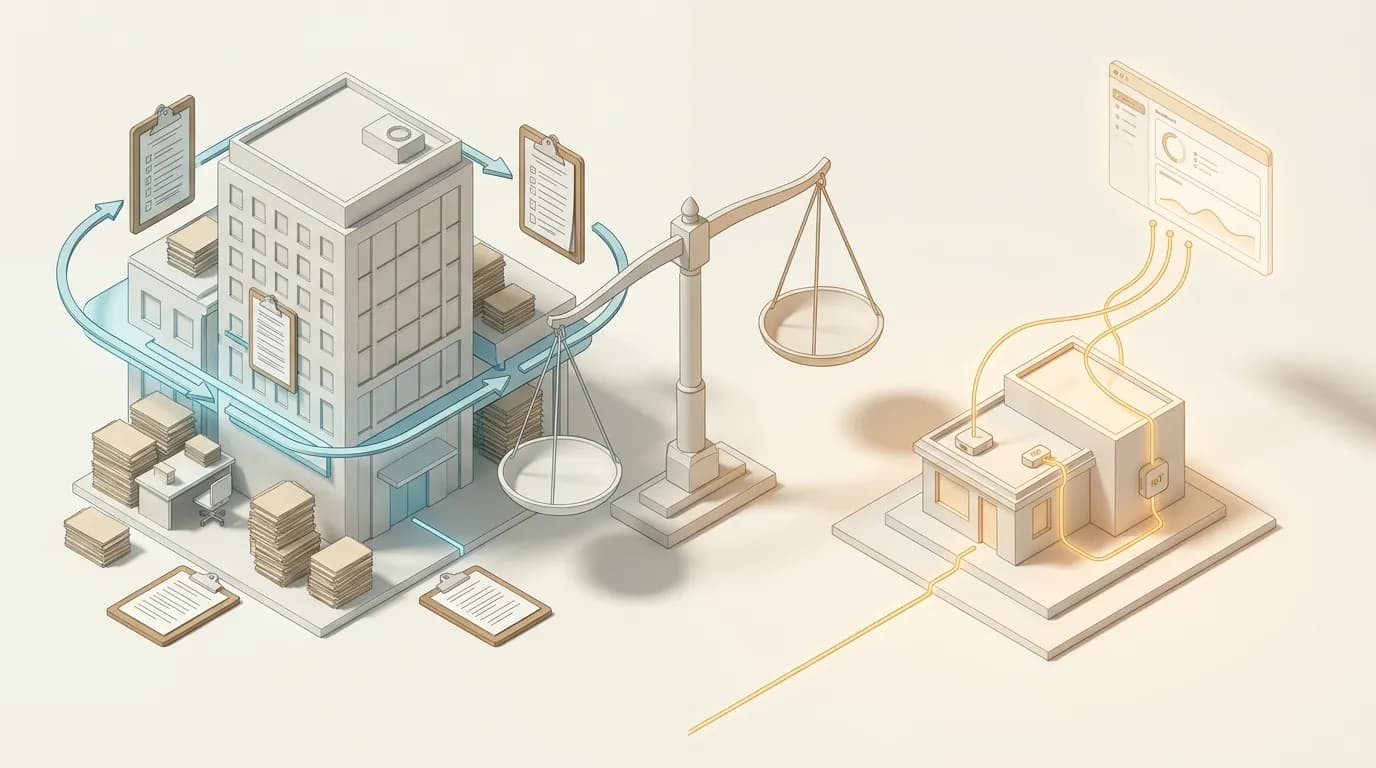
You're sitting in a conference room, staring at two proposals. The first is from an ISO consultant. Sixty pages of documentation requirements, internal audits, management reviews, and a price tag that makes your CFO wince. The second is from a monitoring provider. Sensors, a dashboard, and a promise that you'll start saving within weeks. Both claim to solve your energy problem. Neither explains which one you actually need.
If you're running an SME in Europe right now, this dilemma is real. Energy costs have surged. Regulations are tightening. Your supply chain partners are asking about your sustainability credentials. Everyone has an opinion on what you should do. But nobody seems to account for the fact that your energy budget and your team are both limited.
This article cuts through the noise. We'll break down what ISO 50001 really demands, what simple energy monitoring actually delivers, and how to decide which path makes sense for your business today.
Key Takeaways
- ISO 50001 certification costs €15,000-50,000 for SMEs and takes 6-18 months to implement (Greenly, 2025)
- Simple energy monitoring delivers 10-30% savings with payback under 12 months (IEA, 2025)
- The EU EED mandates ISO 50001 only for companies consuming over 85 TJ/year (about 23.6 GWh), far above most SMEs (EU Directive 2023/1791)
- Globally, only 38,482 ISO 50001 certificates exist, covering 88,323 sites (ISO Survey, 2024)
- For companies below the 85 TJ threshold, monitoring provides the data foundation that makes future certification faster and cheaper
- Operational changes from monitoring alone deliver 10-15% savings within the first 30 days (ACEEE, 2025)
What Does ISO 50001 Actually Require?
ISO 50001 is not a technology. It's a management system. Formally called an Energy Management System (EnMS), it prescribes a structured framework for continuously improving energy performance. Here's what that involves in practice:
The Core Requirements
- Energy policy: A formal, documented commitment from top management
- Energy planning: Establishing an energy baseline from at least 12 months of data, identifying Significant Energy Uses (SEUs), and setting measurable targets
- Implementation: Assigning roles, training staff, controlling operational processes, and managing procurement with energy criteria
- Monitoring and measurement: Ongoing data collection, analysis, and calibration against your baseline
- Internal audits: Regular self-assessments to verify compliance
- Management review: Senior leadership must review EnMS performance at defined intervals
- Continual improvement: The entire system follows a Plan-Do-Check-Act cycle, with documented evidence of progress
That's not a one-time project. It's a permanent operational layer. For SMEs with lean teams, the administrative burden alone can be overwhelming. And then there's the cost.
What Does It Cost?
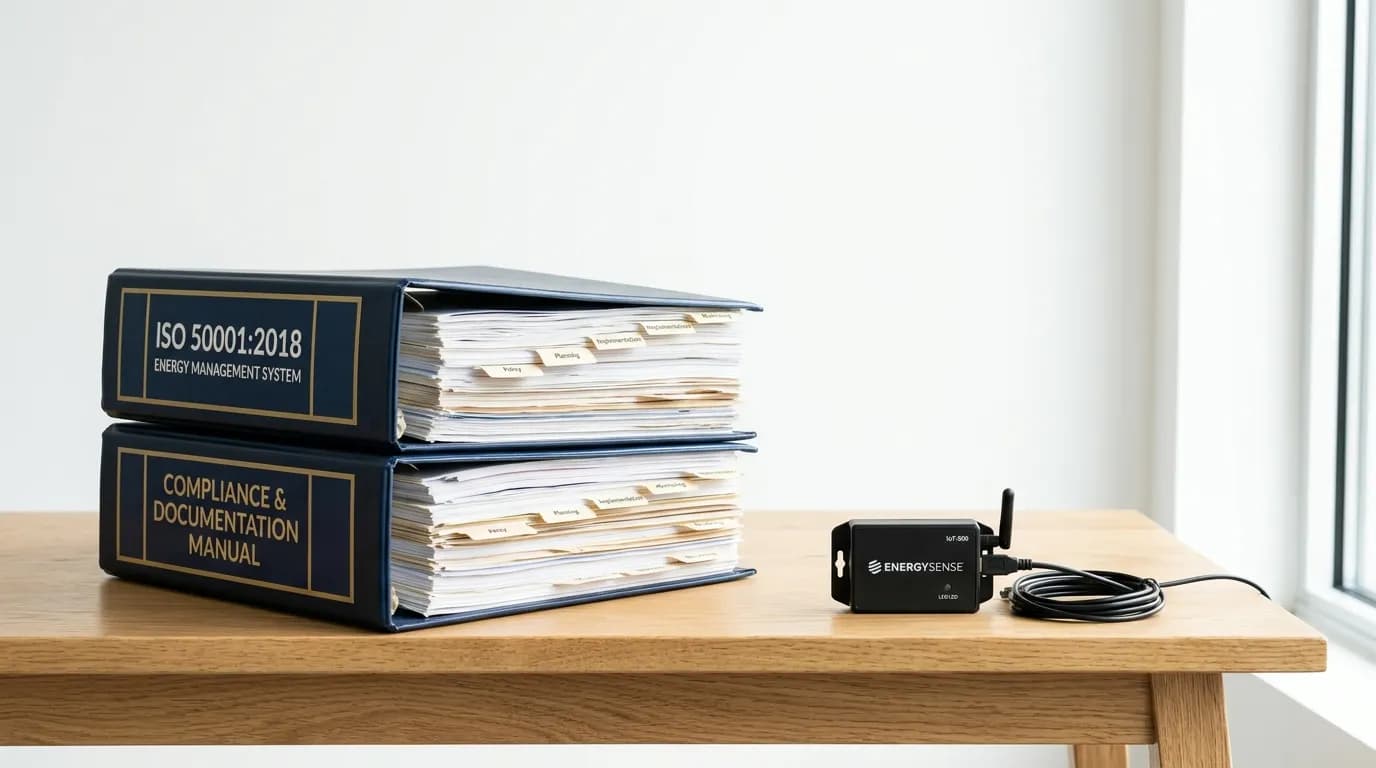
Our finding: Based on conversations with dozens of European SMEs exploring certification, the total cost of ISO 50001 for a single-site operation typically falls between €15,000 and €50,000 in the first year. That includes consultant fees, internal staff time, software tools, and the certification audit itself. Annual surveillance audits and recertification every three years add €3,000-8,000 per year ongoing.
For large enterprises consuming millions in energy, that's a rounding error. For a 10-store retail chain or a mid-sized logistics hub, it's a meaningful investment that competes with other priorities. But is the investment always justified?
Does Your Business Actually Need ISO 50001?
To put 85 TJ in perspective: that's roughly the consumption of a large manufacturing plant or a portfolio of 50+ commercial buildings. The vast majority of European SMEs fall well below this threshold.
So why do so many SMEs feel pressured toward certification? Three common reasons:
- Supply chain requirements. Large corporates increasingly ask suppliers for ISO certifications as part of ESG compliance.
- Consultant recommendations. Energy consultants naturally steer toward the premium service.
- Confusion about regulations. The EED's complexity makes it hard to know which rules apply to you.
If your annual energy consumption is under 10 TJ, the directive doesn't require you to do anything beyond what national regulations demand. That doesn't mean you should ignore energy management. It means you have options that are faster, cheaper, and more practical.
What Does Simple Energy Monitoring Deliver?
Simple energy monitoring means installing sensors on your electrical circuits, connecting them to a cloud platform, and getting visibility into what your building actually consumes. No documentation framework. No internal audits. No certification body. Just data and the ability to act on it.
What You Get From Day One
Within the first month, a good monitoring platform delivers:
- Real-time consumption data broken down by circuit, zone, or equipment
- Automated alerts when consumption exceeds normal thresholds
- Anomaly detection that flags equipment faults before they become costly
- Benchmarking across sites in a multi-location portfolio
- Bill validation to catch overcharges and tariff errors
Our finding: Across our portfolio of 1,500+ monitored sites, operational changes identified through monitoring alone, such as schedule corrections, setpoint adjustments, and fault repairs, consistently deliver 10-25% energy savings with payback under 12 months. No capital investment required. No certification needed.
The savings aren't theoretical. They show up on your next electricity bill. And they compound over time as your team learns to read the data and act on it.
How Do the Two Approaches Compare Side by Side?
The numbers tell a clear story. For SMEs, simple monitoring captures the large majority of available savings at a fraction of the cost and timeline. ISO 50001 adds incremental value through its structured management framework, but that value scales with organizational size and energy spend.
When Does ISO 50001 Make Sense?
ISO 50001 makes sense when:
You're Above the EED Threshold
If your organization consumes more than 85 TJ annually, a certified energy management system is legally required by October 2027. There's no shortcut. Start planning now, because implementation takes 6-18 months and auditors are already booking up.
Your Supply Chain Demands It
Major retailers, automotive OEMs, and multinational corporations increasingly require ISO certifications from their suppliers. If losing a key contract is the alternative, the €15,000-50,000 investment pays for itself immediately.
You've Already Captured the Easy Wins
Companies that have been monitoring energy for 12+ months and have already implemented the obvious operational fixes often hit a plateau. ISO 50001's structured approach to continual improvement helps push past that plateau by formalizing targets, assigning accountability, and creating review cycles that prevent backsliding.
Your Energy Spend Justifies It
A company spending €2 million per year on energy can justify ISO 50001's cost with a 1-2% improvement. For a company spending €50,000, the certification cost exceeds an entire year of potential savings. The math needs to work.
When Is Monitoring Alone Enough?
Monitoring is enough when:
You're Below 10 TJ Annual Consumption
The EED doesn't require you to have a certified EnMS or even a formal energy audit. What it does require, through broader EU sustainability regulations, is that you understand and manage your energy use responsibly. Monitoring gives you that understanding.
You Need Results This Quarter
Your Team Is Already Stretched
Certification requires a dedicated energy manager or at least someone with significant allocated time. If your facility manager is already handling maintenance, vendor management, and compliance for other standards, adding EnMS responsibilities is a recipe for half-hearted implementation and wasted money.
You Operate Multiple Sites
Can Monitoring Be a Stepping Stone to ISO 50001?
Here's why monitoring first makes the eventual certification journey smoother:
You Build the Baseline Automatically
ISO 50001 requires at least 12 months of energy baseline data. If you've been monitoring for a year or more, that baseline already exists. No retroactive data gathering. No estimations. Clean, granular, time-stamped consumption data ready for auditors.
You Identify SEUs Before the Consultant Arrives
Significant Energy Uses are the backbone of ISO 50001 planning. With monitoring data, you already know which systems consume the most, when peak demand occurs, and where the biggest opportunities sit. That means your consultant spends time on strategy instead of discovery.
You Prove ROI Before Committing to Certification
One of the biggest risks with ISO 50001 is investing heavily in a system that doesn't deliver expected returns. When you start with monitoring, you prove the value of energy management with hard numbers. Your business case for certification writes itself: "We saved 15% with monitoring alone. Certification will help us capture the next 10%."
You Train Your Team on Data-Driven Decisions
The cultural shift toward energy awareness is often the hardest part of ISO 50001. When your team has been using monitoring dashboards for months, they're already thinking about energy. The management system framework becomes a natural evolution, not a forced revolution.
Our finding: Among AICE Power clients who later pursued ISO 50001, those who had at least 12 months of monitoring data before starting certification completed the process 40% faster and reported significantly lower consulting costs. The data foundation eliminated the most time-consuming phase of implementation.
How Should You Decide? A Decision Framework
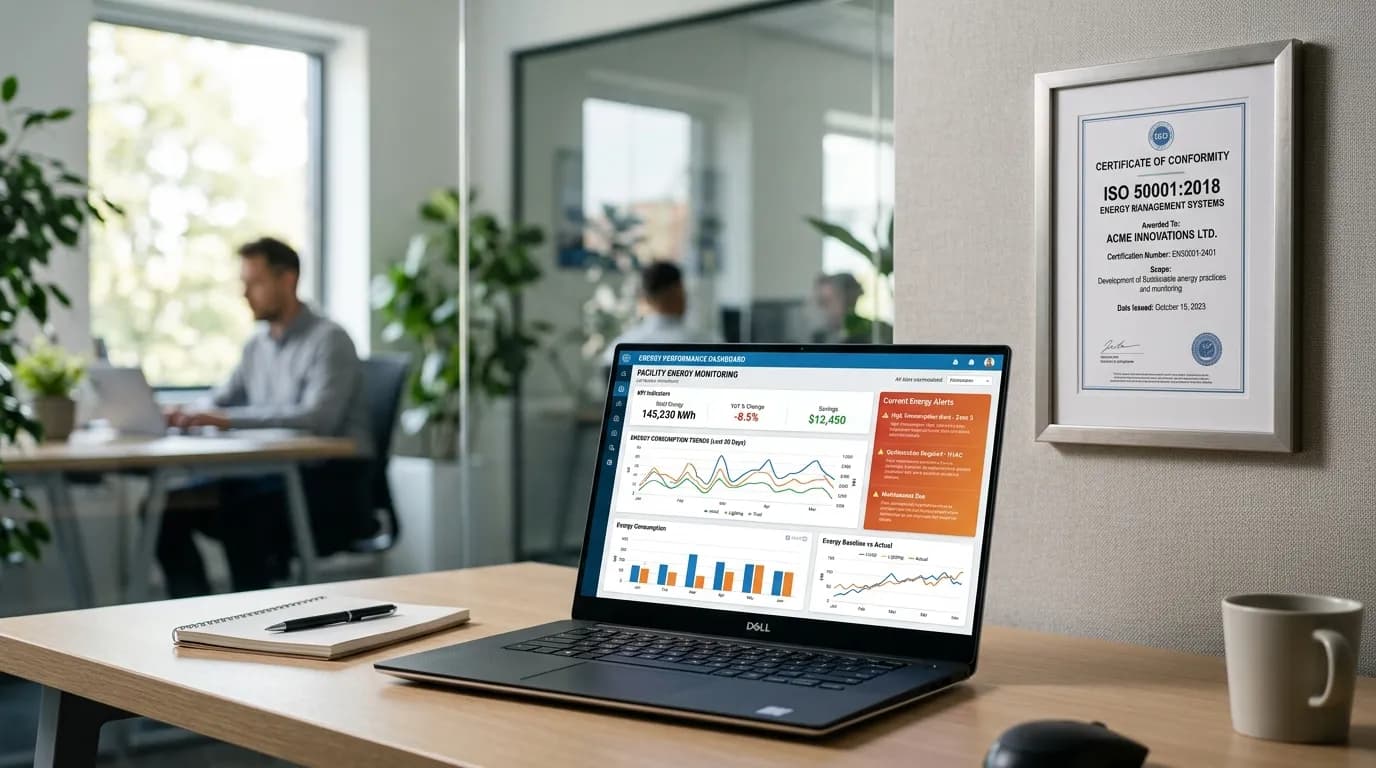
The right choice depends on your specific situation. Rather than defaulting to the most expensive option or the easiest one, work through these questions:
The pattern is clear. Unless you're legally required to certify or have a specific supply chain obligation, monitoring is either the right answer or the right first step. There's no scenario where jumping straight to ISO 50001 without data is the optimal path.
What About the 10-85 TJ Range?
For most, continuous monitoring is a better investment than periodic audits. Here's why:
A four-year audit cycle creates blind spots. An auditor visits, takes measurements, writes recommendations, and leaves. For the next four years, you have no visibility into whether those recommendations are working, whether new issues have emerged, or whether consumption is trending up or down.
Continuous monitoring fills those gaps. It provides the data an auditor would collect, but 24/7, 365 days a year. When audit time comes, you already have everything the auditor needs. The audit becomes a validation exercise rather than a discovery process.
Does this mean you can skip audits entirely? No, not if you're in the 10-85 TJ range. But monitoring makes those audits faster, cheaper, and more productive. And if you eventually decide to pursue certification, you've already built the foundation.
The Bottom Line: Start With Data
Energy management isn't a binary choice between "nothing" and "ISO 50001." It's a spectrum. And for most European SMEs, the smartest position on that spectrum is continuous monitoring with targeted action.
The certification can come later, if and when it makes sense. The savings start now.
Frequently Asked Questions
Is ISO 50001 mandatory for all European businesses?
No. The EU Energy Efficiency Directive (2023/1791) only mandates a certified energy management system for companies consuming more than 85 TJ (about 23.6 GWh) per year. Companies in the 10-85 TJ range must conduct energy audits every four years. Most SMEs fall below both thresholds and have no legal obligation to certify.
How much does ISO 50001 certification cost for a small business?
For a single-site SME, total first-year costs typically range from €15,000 to €50,000, including consulting, staff time, and the certification audit. Annual maintenance costs add €3,000-8,000 for surveillance audits and system upkeep. Multi-site operations face higher costs, as each site requires assessment.
Can energy monitoring replace ISO 50001?
Monitoring and ISO 50001 serve different purposes. Monitoring provides the data and visibility needed to identify and capture energy savings. ISO 50001 provides the management framework to sustain and continuously improve those savings. For most SMEs, monitoring alone delivers the majority of available savings. For large energy consumers or those facing regulatory requirements, ISO 50001 adds structured governance on top of monitoring data.
How quickly does energy monitoring pay for itself?
Should I get ISO 50001 before or after installing monitoring?
After. Installing monitoring first is almost always the better approach. You build 12+ months of baseline data that ISO 50001 requires, you identify your Significant Energy Uses, and you prove the ROI of energy management to your leadership team. Companies that monitor first complete certification faster and at lower cost than those that start from scratch.