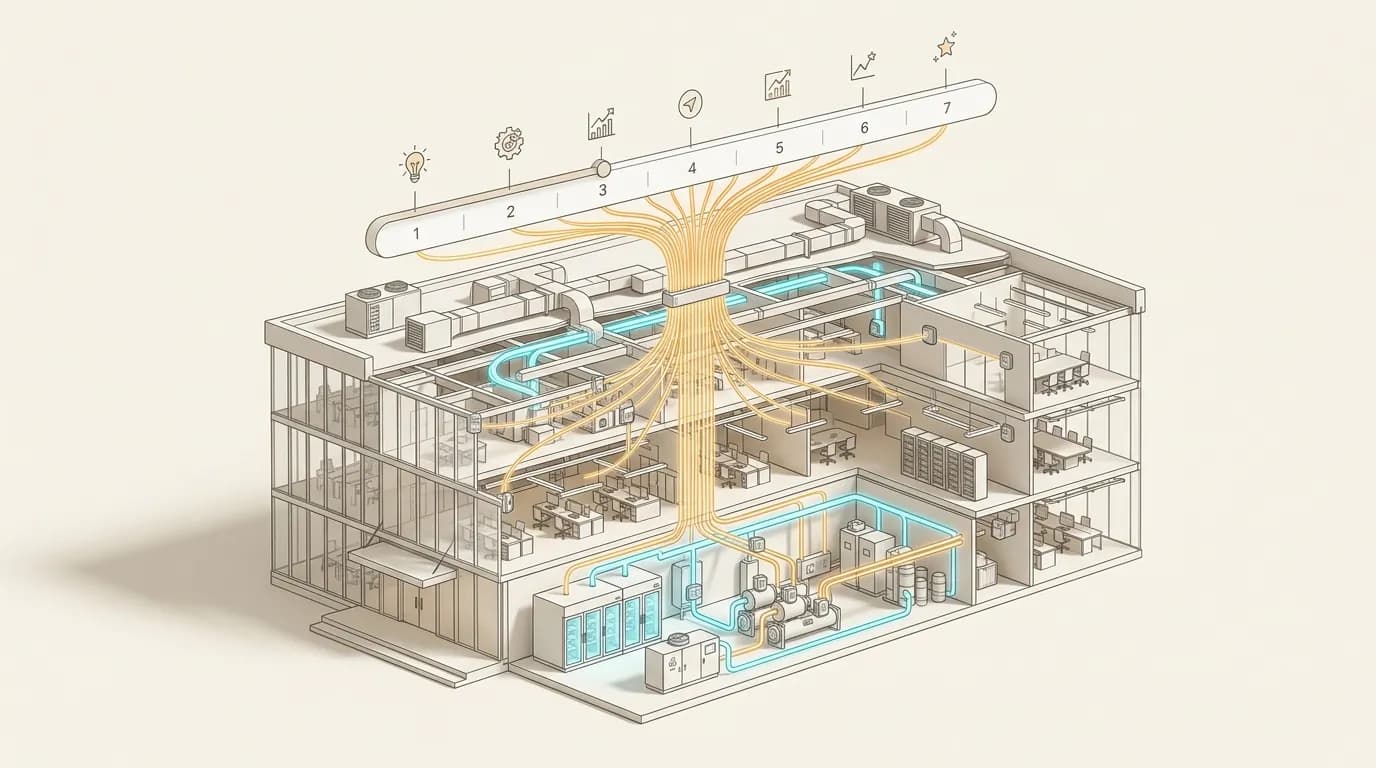
What Your Energy Data Tells You in the First 7 Days of Monitoring
You've just plugged in the sensors. The gateway is online. And for the first time, your building's energy consumption isn't a mystery that arrives once a month in a utility bill. It's a live feed. A heartbeat on your screen. The numbers refresh every few seconds, and suddenly you realize: you've been running blind for years.
That moment of clarity is something we've witnessed across more than 1,500 deployments. The first seven days of energy monitoring are, without exaggeration, the most revealing. Not because the technology is doing anything complex. But because the data was always there. You just couldn't see it.
This is the story of what happens, day by day, when you finally turn the lights on.
Key Takeaways
- Your building's overnight base load often accounts for 26-65% of total energy use, most of it wasted (ScienceDirect, 2020)
- On average, 30% of energy consumed in commercial buildings is wasted (US DOE / Energy Star)
- Real-time monitoring identifies 4x more savings opportunities than traditional audits (CarbonMinus, 2025)
- Most facilities discover at least two or three hidden anomalies within the first week
- Demand charges alone can represent 30-70% of your electricity bill (NREL / Clean Energy Group)
- First-week findings typically point to savings of 10-25% with payback under 36 months (ACEEE, 2025)
Day 1: Your Building Has a Heartbeat
The first thing you notice is the rhythm. Every building has one. HVAC compressors cycle on and off. Lighting flips between zones. Refrigeration hums in steady intervals. It looks chaotic at first, but within hours, a pattern starts to emerge.
The Baseline Emerges
Your first day of data establishes a baseline. It's the most important measurement you'll ever take, because everything that follows is measured against it. You'll see:
- Total consumption over 24 hours, broken down by circuit or system
- Peak draw during business hours versus overnight
- The ratio between your busiest hour and your quietest
Our finding: Across our portfolio of 1,500+ monitored sites, most facility managers overestimate their building's overnight shutdown by 30-40%. They assume equipment powers down when the last person leaves. It rarely does.
What does this mean for your business? That gap between perception and reality is where the savings live. You just need data to see it.
Day 2: Why Is Your Building Consuming Energy at 3 AM?
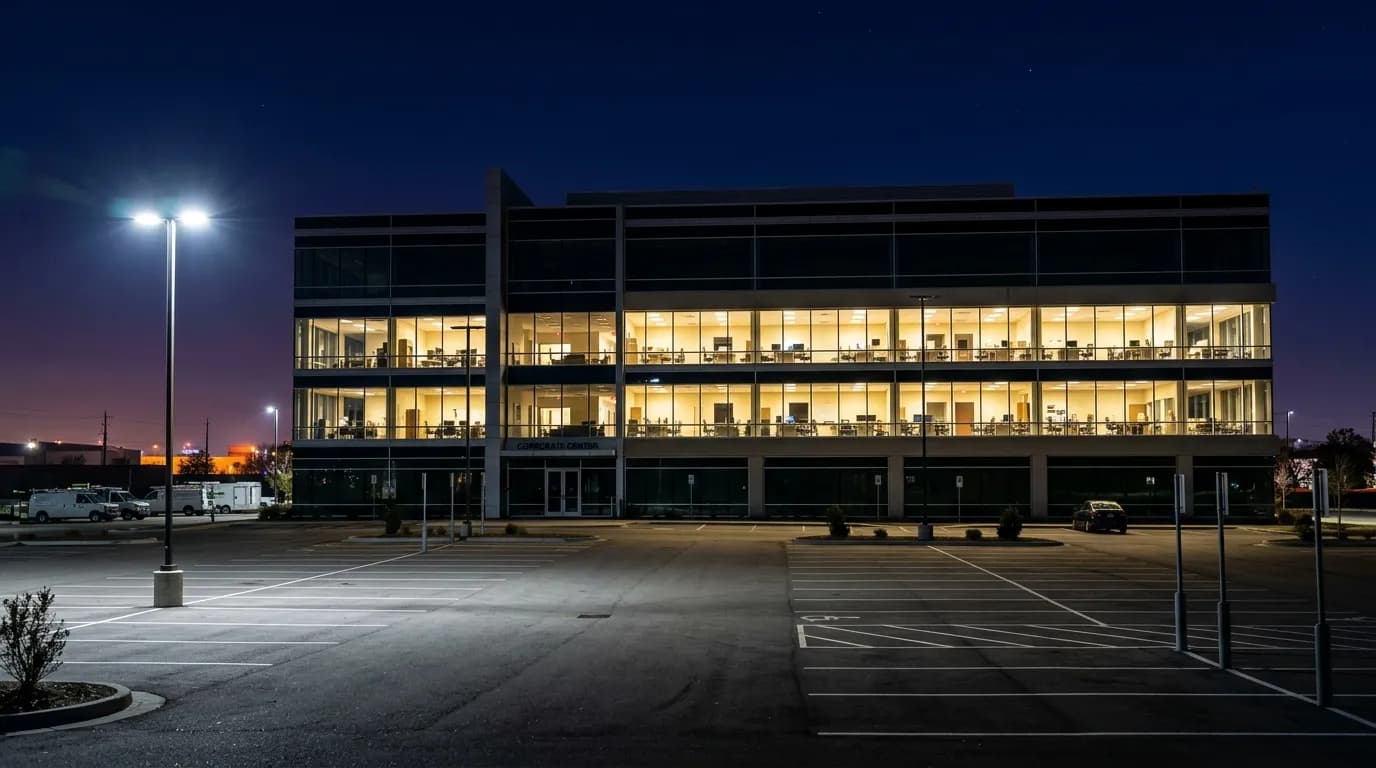
This is the day that changes your perspective. With 48 hours of data, the overnight pattern becomes clear. And for most buildings, it's not pretty.
The "Sleeping" Consumption Problem
Your building doesn't sleep the way you think it does. Day 2 reveals what we call the "sleeping" consumption profile. Here's what typically stays on after hours:
- HVAC systems running on schedules programmed during initial commissioning that no longer match actual occupancy
- Lighting in corridors, storage areas, and parking that never switches off
- IT infrastructure and plug loads drawing power 24/7
- Ventilation fans running at full speed with no one to ventilate for
How much money is leaving your building every night while you're asleep?
Our finding: In the first 48 hours of monitoring, 78% of our deployments reveal at least one HVAC schedule that doesn't match the building's actual occupancy pattern. The most common issue: systems starting 1-2 hours too early and shutting down 1-3 hours too late.
Day 3: The First Anomaly Appears
By day three, you have enough data for patterns to stabilize. And that's precisely when anomalies become visible. Something that doesn't fit the pattern stands out like a sore thumb.
What Does an Anomaly Look Like?
The most common day-3 discoveries across our deployments include:
Setting Up Your First Alerts
Days 4-5: The Weekend Tells a Different Story
If your monitoring starts on a Monday, days 4 and 5 bring the first full weekend of data. And for most businesses, this is where the biggest surprise lives.
Why Is Weekend Consumption So High?
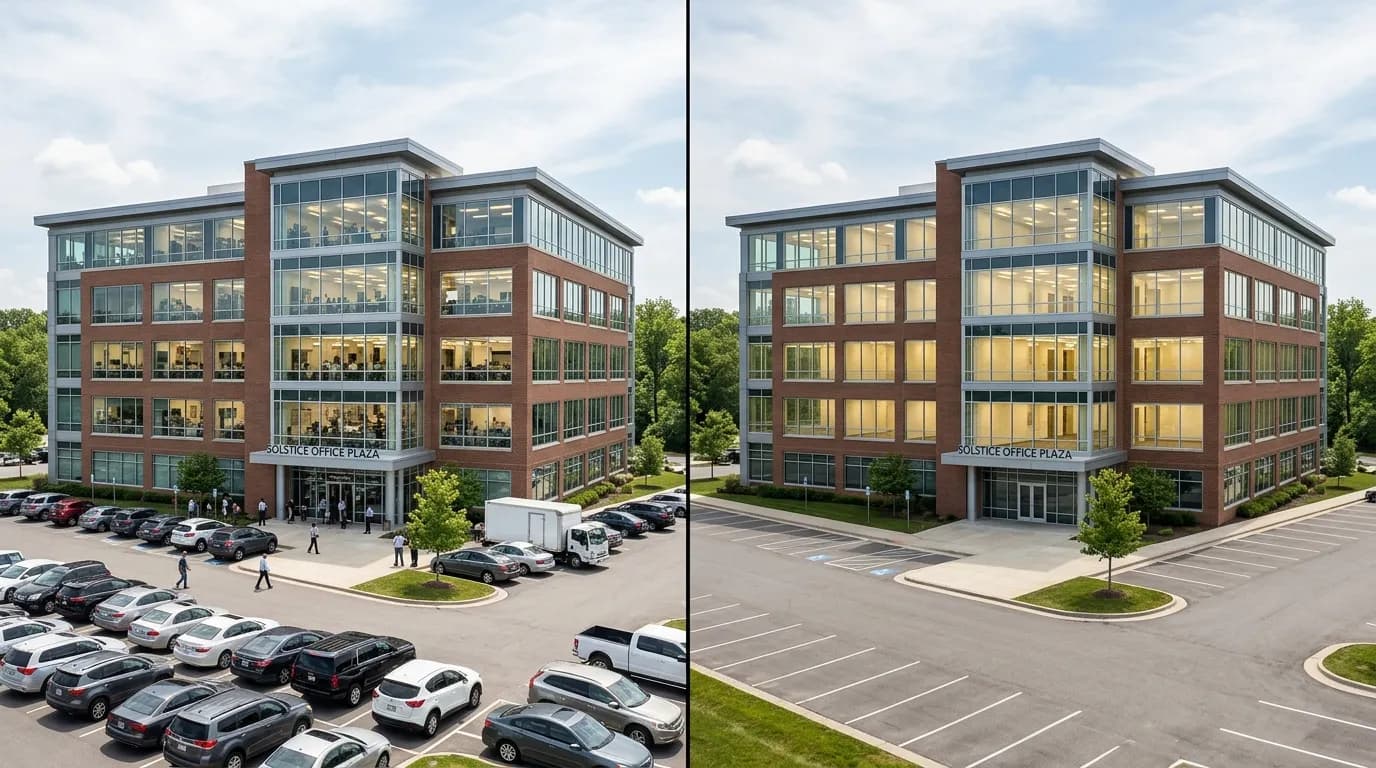
Our finding: Across our retail and hospitality deployments, weekend base load averages 72% of the weekday base load. For buildings that should be fully closed, that number should be closer to 25-35%. The gap represents pure waste.
Here's the pattern we see most often. A supermarket closes at 20:00 on Saturday. Refrigeration must continue, obviously. But the HVAC keeps running at daytime setpoints. Lighting in back offices stays on. The hot water heater cycles all weekend. By Monday morning, you've burned through energy equivalent to an extra half-day of operation for zero revenue.
After-Hours Waste Becomes Actionable
The weekday-to-weekend comparison transforms abstract waste into concrete actions. Now you can answer specific questions. Should the HVAC enter setback mode at 19:00 instead of 22:00? Can lighting zones be programmed by area instead of building-wide? Is the ventilation override still active from last month's maintenance?
These aren't theoretical improvements. They're schedule changes that a building manager can implement in an afternoon. And they typically represent the first quick wins.
Days 6-7: The Full Picture Comes into Focus
By the end of your first week, you have a complete cycle. Weekdays and weekends. Business hours and off-hours. Morning ramp-up and evening shutdown. And if the weather shifted during the week, you might even have your first temperature correlation data.
Weather Correlation and Peak Demand
Days 6 and 7 typically bring enough variation to notice how weather affects your consumption. A warmer afternoon might push HVAC energy up 20-30%. A cool morning might reveal that heating stayed on unnecessarily. These correlations become powerful over time, but even in the first week, they tell you something critical about how responsive your systems are to actual conditions.
The Action Plan Writes Itself
By day 7, most facility managers have a list. Not a vague list of "things to investigate." A specific, prioritized list of actions with estimated savings attached. That's the difference between monitoring and auditing. An audit gives you recommendations. A week of monitoring gives you evidence.
Our finding: The average site identifies 3-5 actionable items in the first week. The top three, ranked by frequency across our deployments: (1) HVAC schedule misalignment, (2) overnight lighting waste, (3) equipment operating beyond scheduled hours. Together, these typically account for 8-15% of total consumption.
What Are the Most Common "Aha Moments" Across 1,500+ Deployments?
Here are the patterns we see again and again.
The Phantom Load
Every building has phantom loads. Equipment that draws power when it shouldn't. Vending machines in unused break rooms. Display lighting in back-of-house areas. Water heaters maintaining temperature in buildings closed for the weekend. Individually small, they add up to 5-10% of total consumption across a typical portfolio.
The Mismatched Schedule
We mentioned HVAC schedules already, but the problem extends further. Parking lot lights running until sunrise when the building opens at 8 AM. Kitchen ventilation active on days the kitchen is closed. Conference room AV systems in permanent standby. Each schedule mismatch is a small leak. Together, they're a flood.
The Degrading Equipment
This one is subtle but valuable. A compressor that's gradually losing efficiency doesn't trigger an alarm. It just uses 15-20% more energy each month. Without a baseline for comparison, nobody notices. With monitoring, the trend line tells the story within days.
How Do You Turn First-Week Data into Quick Wins?
Schedule Corrections (Day 1-2 Findings)
Equipment Repairs (Day 3 Findings)
Demand Management (Day 6-7 Findings)
Stagger equipment startups to avoid demand spikes. Program HVAC zones to ramp up sequentially rather than simultaneously. These adjustments can reduce peak demand by 15-20%, directly cutting your demand charges.
Why Does the First Week Matter More Than Any Energy Audit?
Here's the fundamental difference. An energy audit is a snapshot. A consultant visits, measures, observes, and writes a report. That report captures one moment in time. It costs thousands of euros and delivers a set of recommendations based on assumptions about how your building operates.
One week of continuous monitoring captures 10,080 minutes of reality. Every cycle, every spike, every quiet period. It doesn't assume your HVAC shuts down at 19:00. It shows you that it actually shuts down at 22:47. It doesn't estimate your base load. It measures it, minute by minute, across seven complete days.
The Data Compounds
Your first week is just the beginning. But it's the most important beginning. Because every week that follows builds on that baseline. Seasonal patterns emerge over months. Equipment degradation becomes visible over quarters. The longer you monitor, the smarter your building gets.
What Should You Do Next?
If you've read this far, you're probably in one of two situations. Either you already have monitoring and want to know if you've extracted enough value from your first week. Or you're considering monitoring and want to understand what you'll get.
Here's what we recommend:
-
Review your first-week checklist. Did you identify your base load? Find at least one schedule mismatch? Spot an equipment anomaly? If not, your monitoring setup may need more granularity.
-
Prioritize by impact. Schedule fixes first, because they're free. Equipment repairs second, because they prevent bigger costs. Demand management third, because it requires coordination.
-
Set your first alerts. Don't wait for monthly reports. Configure real-time alerts for base load exceedance, demand spikes, and equipment anomalies.
-
Benchmark across sites. If you manage multiple locations, compare first-week profiles. The sites with the highest base load ratios are your biggest opportunities. Our portfolio analysis methodology makes this comparison straightforward.
-
Plan your 30-day review. The first week is the foundation. The first month confirms the patterns and validates the savings. Schedule a review to track progress.
Frequently Asked Questions
How quickly can energy monitoring be installed and producing data?
Modern IoT-based monitoring systems can be installed in hours, not weeks. Gateways connect to existing electrical panels with clamp-on sensors that require no rewiring. Most deployments are producing live data within 24 hours of installation. The speed of deployment is one of the key advantages over traditional metering, which can take weeks to commission.
What if my building is already "efficient"? Will the first week still reveal savings?
Do I need monitoring on every circuit, or is a main meter enough?
Main meter monitoring gives you the total picture but limits your ability to act. It's like checking your bank balance without seeing transactions. For actionable insights, circuit-level monitoring is essential. At minimum, separate your HVAC, lighting, refrigeration, and plug loads. The more granular your data, the faster you identify specific waste sources.
How does continuous monitoring compare to a one-time energy audit?
What ROI can I expect from the first week's findings alone?
First-week findings typically point to 8-15% of total energy consumption in addressable waste. For a mid-sized commercial building spending 100,000 euros per year on energy, that's 8,000-15,000 euros in annual savings. Most monitoring systems cost a fraction of that to deploy, resulting in payback periods of 6-11 months. The first week doesn't capture everything, but it captures enough to justify the investment many times over.