
Energy Tracking for Buildings: How to Cut Costs and Stay Compliant
Key Takeaways
- Building energy management systems deliver 10-25% savings with 18-36 month payback (ACEEE, 2025)
- The Decret Tertiaire requires -40% consumption by 2030 for buildings over 1,000 m²
- Predictive maintenance cuts costs 25-30% and reduces breakdowns by up to 75%
- AI-powered systems can achieve over 10% annual savings without replacing equipment
- Real-time tracking prevents the 20-30% of savings that typically vanish after retrofits
Why Does Energy Tracking Matter More Than Ever?
The Economic Reality

What does that actually mean in euros? For a mid-sized supermarket spending 150,000 euros per year on energy, even a 15% reduction translates to over 22,000 euros saved annually. That's not theoretical. We've seen those numbers across client sites.
In our experience with commercial building portfolios, poorly optimized offices consume 20-30% more than comparable buildings with active monitoring. That gap compounds year over year.
Regulatory Pressure Is Real
Can you hit those targets without real-time data? Probably not.
What Savings Can You Realistically Expect?
Direct Cost Reductions
The biggest wins come from three areas: schedule optimization, fault detection, and setpoint adjustment. A cold room running 30% above normal usually signals a faulty seal, thermostat, or compressor. Catching that in hours rather than weeks prevents thousands in wasted energy.
Our analysis of over 1,500 sites shows that the first 90 days after deployment yield the steepest savings curve. Most facilities discover at least two or three "hidden" issues that have been silently inflating bills for months.
Predictive Maintenance Benefits
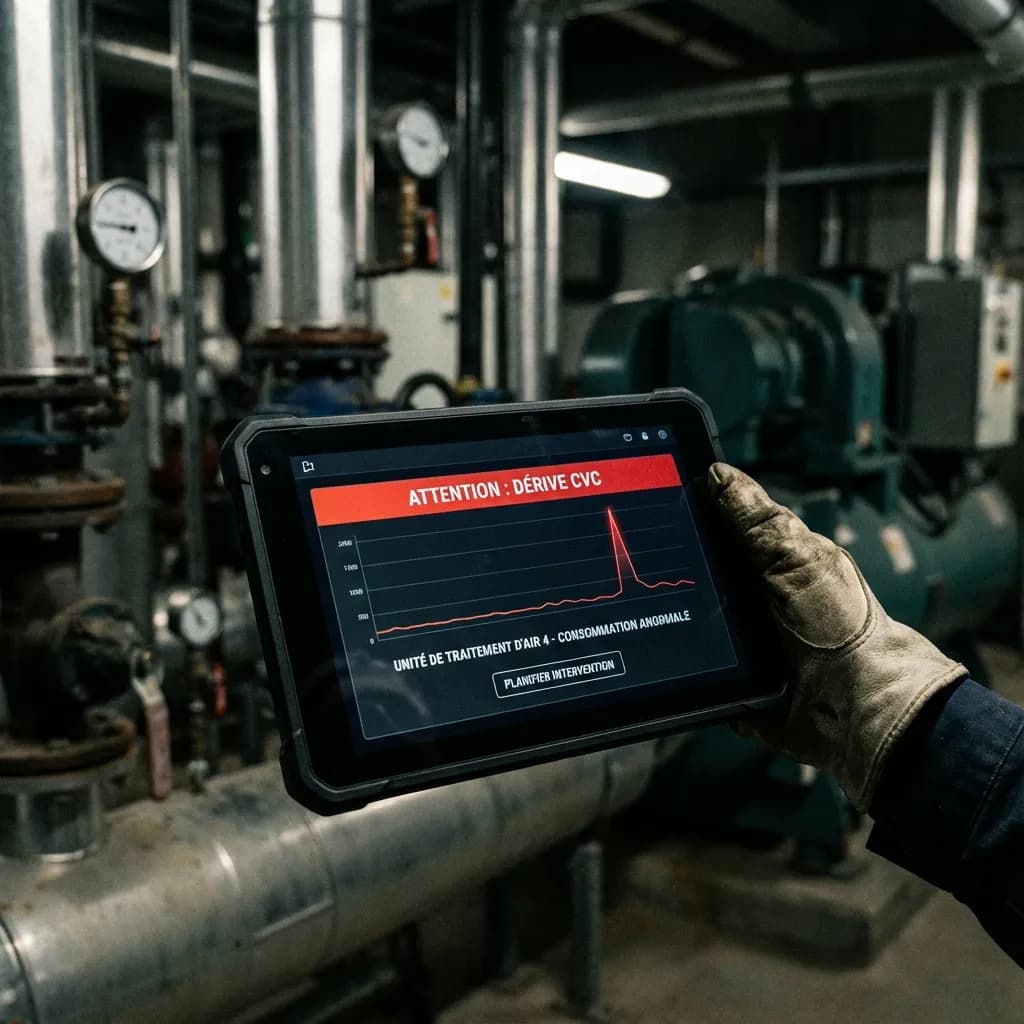
We've found that connecting energy data with maintenance workflows transforms reactive teams into proactive ones. It's not just about saving energy. It's about saving time and extending equipment life.
Why Do Savings Disappear After Retrofits?
How Should You Set Up an Energy Tracking System?
Choosing Measurement Points
Granularity determines usefulness. For supermarkets, monitor refrigeration, HVAC, lighting, heating, and specialty equipment like bakery ovens separately. In office buildings, segment by zone (offices, lobbies, parking) and by system (HVAC, lighting, elevators, IT).
Why does granularity matter so much? Because monitoring only the main meter is like tracking your bank balance without seeing individual transactions. You know something's wrong, but you can't act on it.
Connected Technologies and IoT
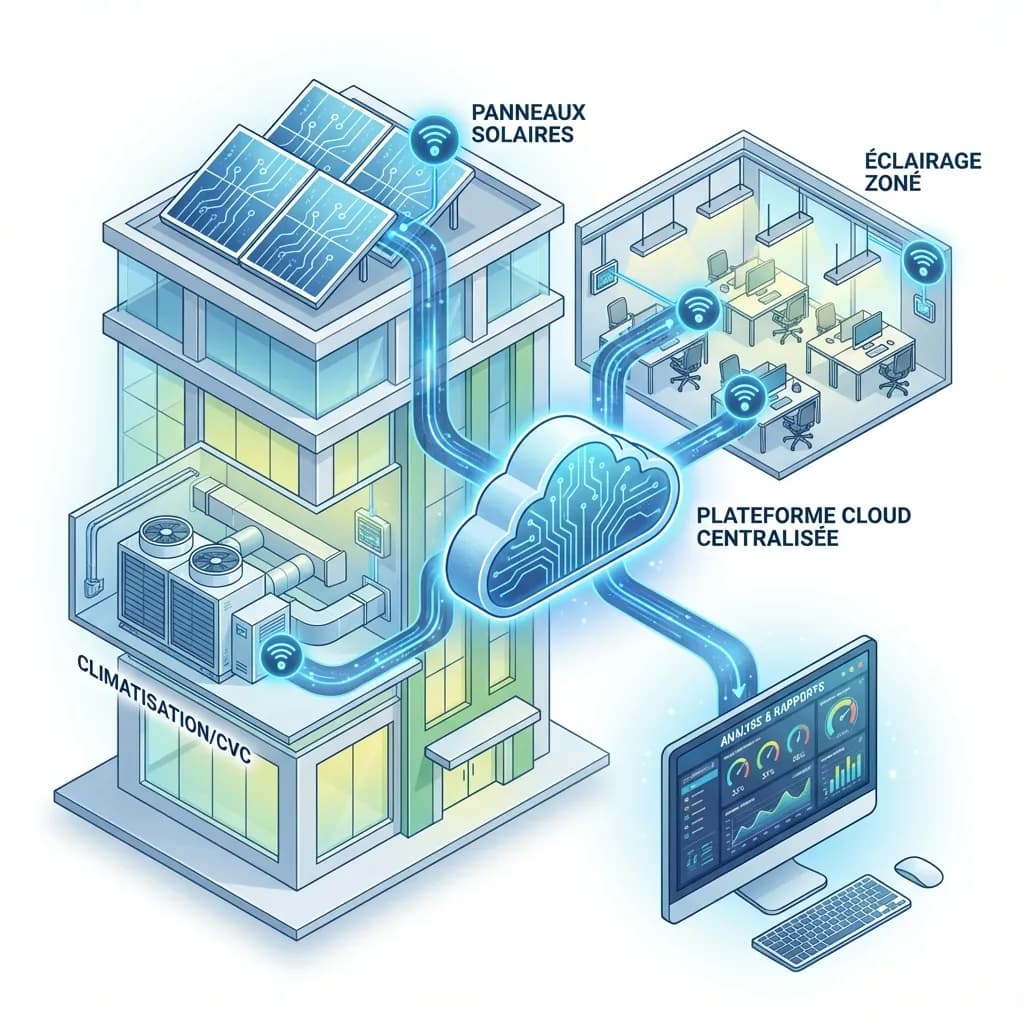
Modern systems combine IoT sensors with cloud platforms for real-time dashboards, automated alerts, and AI-driven analytics. Integration with existing Building Management Systems (BMS) enables automation, like adjusting heating based on actual occupancy rather than fixed schedules.
Training Teams to Act on Data
A tracking system collects data. People create savings. Training technical teams to interpret dashboards, spot trends, and respond to alerts is what turns technology into results. For multi-site managers, centralized data also enables performance benchmarking across locations.
From what we've seen, the difference between a 10% saver and a 25% saver usually isn't the technology. It's whether teams have clear protocols for acting on anomaly alerts within 24 hours.
What Role Will AI Play in Building Energy Management?
Next-generation systems use machine learning to analyze weather forecasts, occupancy patterns, and historical consumption. They then adjust equipment parameters in real time. For supermarkets, that means refrigeration anticipating foot traffic peaks. For offices, it means pre-conditioning only the zones about to be occupied.
What Mistakes Should You Avoid?
Without proper implementation, even the best tracking system underperforms. Here are the most common pitfalls we've observed.
Relying on the Main Meter Alone
Sub-metering by usage is non-negotiable. The main meter tells you what you spent. Sub-meters tell you where and why. That distinction is everything when you're trying to hit a 40% reduction target.
Ignoring Data Quality
Poorly calibrated sensors produce misleading data. Misleading data produces bad decisions. Start with a professional audit to validate sensor placement and calibration before trusting any dashboard.
Delaying the Investment
Every month without tracking is a month of invisible waste. The savings start within weeks. We've found that facilities typically recoup the installation cost in under two years, often much faster.
Frequently Asked Questions
How much does an energy tracking system cost to install?
Is energy tracking required by law in France?
Can I start small and expand later?
Absolutely. A phased approach works well. Start by metering your highest-consuming equipment, typically 20% of systems responsible for 80% of usage. Expand coverage as you validate savings and build internal expertise.
How does energy tracking differ from a standard BMS?
A BMS controls equipment. An energy tracking system monitors, analyzes, and optimizes consumption patterns. The two work best together: tracking identifies savings opportunities, and the BMS executes the adjustments automatically.
What's the difference between energy tracking and an energy audit?
Getting Started: A Practical Roadmap
You don't need a massive budget to begin. Here's a four-phase approach that works.
Conclusion
Energy tracking isn't a luxury or a compliance checkbox. It's the foundation of every serious building efficiency strategy. With BEMCS delivering 10-25% savings, predictive maintenance cutting costs by a quarter, and AI systems pushing performance even further, the question isn't whether to invest. It's how quickly you can start.
The regulatory clock is ticking. The Decret Tertiaire's 2030 deadline is less than four years away. Every month of delay is a month of wasted energy and missed savings. Start with an audit, deploy sensors on your biggest consumers, train your team, and build from there.