How to Cut Energy Costs Without Capital Investment: A Monitoring-First Approach
You've heard the pitch before. A consultant walks in, runs some numbers, and tells you the answer is a six-figure equipment upgrade. New chillers. LED retrofits. A full BMS overhaul. The payback period? Five to seven years, if everything goes perfectly. Meanwhile, your CFO is asking why the energy bill jumped 18% last quarter. You don't need a new building. You need to understand what your current one is actually doing.
That's the core problem. Most commercial buildings waste 10-30% of their energy on faults, bad schedules, and settings nobody has touched in years. Fixing those issues doesn't require capital investment. It requires visibility.
Key Takeaways
- Digital optimization alone can deliver up to 40% energy savings without replacing equipment (IEA, 2025)
- Real-time monitoring achieves 10-30% savings with payback under 12 months (ThingsLog, 2026)
- HVAC schedule corrections save 10-25% with zero capital outlay (CIM, 2026)
- Monitoring-as-a-Service delivers ROI within 6-12 months versus 3-5 years for traditional systems (Envigilance, 2026)
- The first 90 days of monitoring reveal the highest-impact savings opportunities
Why Do Most Companies Assume Energy Savings Require Big Spending?
The assumption runs deep in corporate budgeting. Energy improvements sit in the CAPEX column. They compete with expansion plans, IT upgrades, and store renovations. Board approval takes months. And the longer you wait, the more energy you waste.
Here's what rarely gets mentioned. Most buildings don't have an equipment problem. They have an operations problem. Systems running after hours. Setpoints drifting from spec. Faults going undetected for weeks. These issues cost thousands every month and require zero equipment replacement to fix.
Our finding: Across 1,500+ monitored commercial sites, we've found that the first three operational fixes (schedule corrections, setpoint adjustments, and fault repairs) typically recover 8-15% of total energy spend before any capital project is even considered.
Why would you invest in new equipment before you know what your current equipment is actually doing?
What Is a Monitoring-First Approach to Energy Savings?
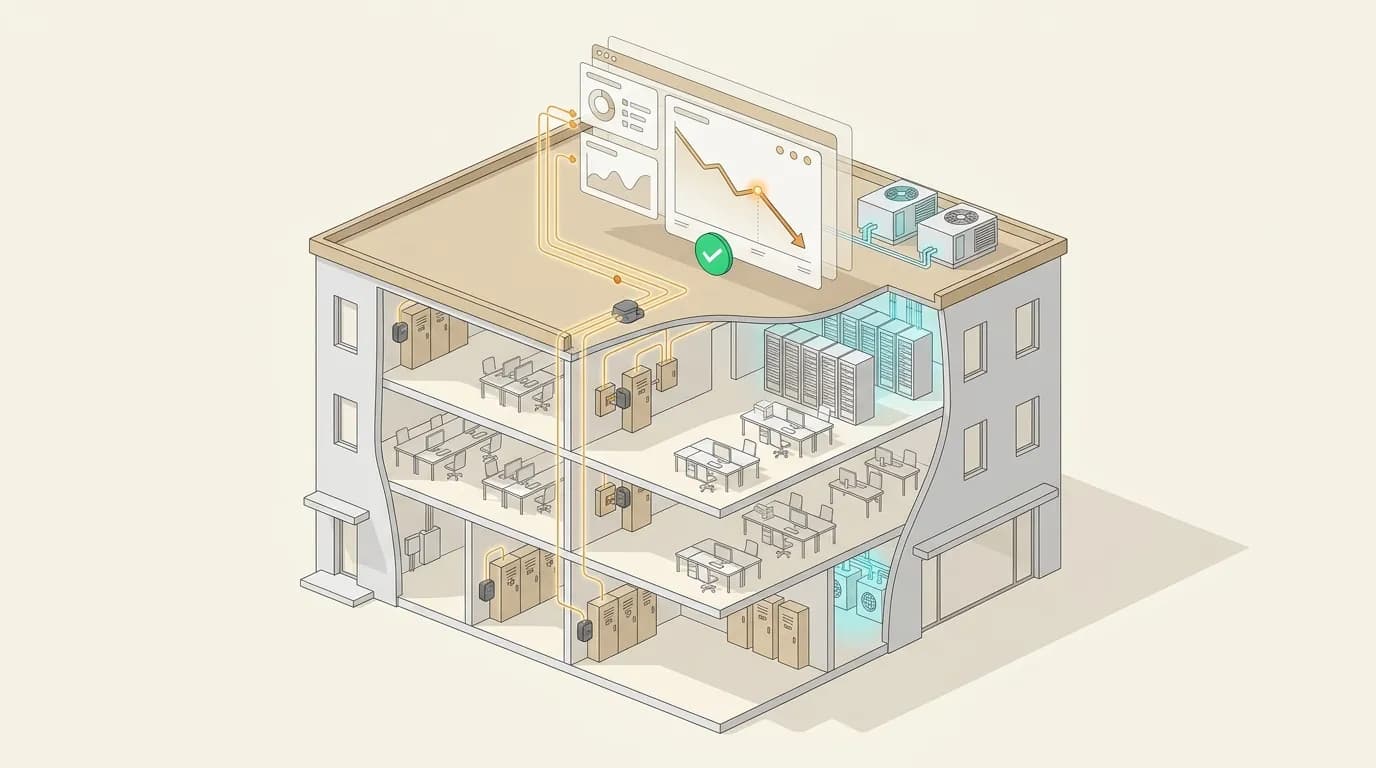
A monitoring-first approach flips the traditional sequence. Instead of starting with equipment purchases, you start with data. IoT sensors and real-time analytics reveal exactly where energy is being wasted, so you can fix the cheapest problems first.
The approach works in three phases:
This sequence matters because it means every future capital decision is informed by actual data, not estimates.
How Much Can Schedule Optimization Save?
Consider what happens in a typical retail store. The HVAC runs from 6:00 AM to 11:00 PM, seven days a week. But the store opens at 9:00 AM and closes at 8:00 PM. That's five hours of unnecessary conditioning every single day. Multiply that across 50 locations and you're looking at serious money.
How many of your buildings are running HVAC on a schedule that nobody has reviewed in the past two years?
What Is the "Invisible Waste" That Monitoring Uncovers?
The most expensive energy waste is the kind nobody sees. A refrigeration compressor cycling too frequently. An air handling unit fighting against itself. Lighting running in empty stockrooms overnight. These issues don't trigger alarms. They just inflate your utility bill by 5-15% month after month.
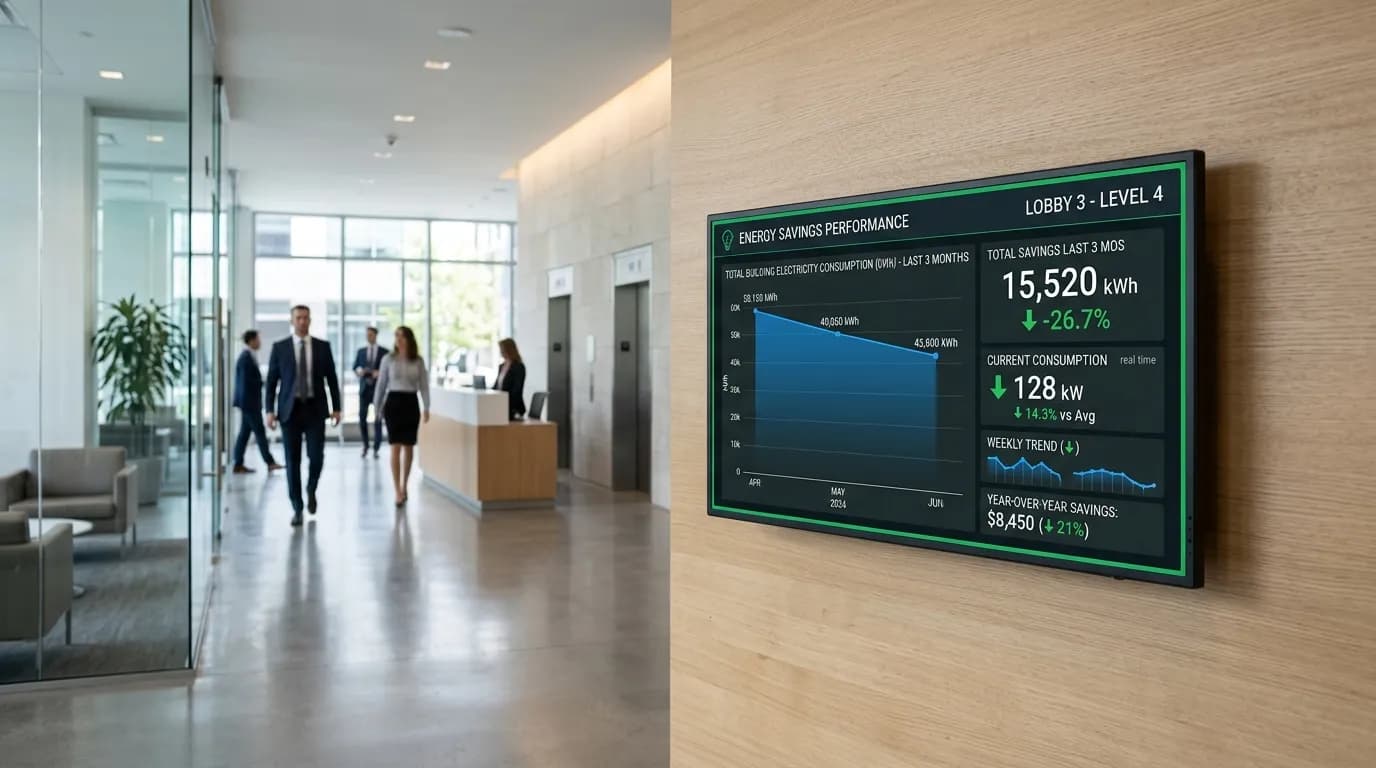
Our finding: In our first 90 days monitoring a portfolio of 200+ retail sites, the most common "invisible waste" categories were: HVAC running outside business hours (found in 68% of sites), refrigeration setpoints 2-4 degrees colder than necessary (found in 41% of sites), and lighting schedules misaligned with actual occupancy (found in 35% of sites).
Traditional energy audits catch some of these problems. But audits are snapshots. They show you what's happening on one particular Tuesday afternoon. Real-time monitoring catches the problems that only appear on weekends, at night, or during seasonal transitions.
The same logic applies to every system in your building. You need to see the problem before you can fix it. And you need to keep watching to make sure the fix holds.
Is Monitoring Really an OPEX Subscription, Not a CAPEX Project?
This matters for two reasons. First, OPEX decisions don't need board approval. A facility manager can often approve a monthly subscription within their existing budget. Second, the risk profile changes completely. If the system isn't delivering value after three months, you cancel the subscription. You haven't committed to a five-year depreciation schedule.
What would your CFO say if you could show energy savings with no capital budget request?
What Does the First 90 Days of Monitoring Reveal?
The first 90 days after deploying monitoring consistently produce the steepest savings curve. That's because the biggest waste is also the easiest to find. Here's what a typical timeline looks like across our client portfolio.
Our finding: The median cumulative savings identified in the first 90 days of monitoring across our portfolio is 12% of total energy spend. Roughly 60% of those savings come from schedule corrections alone, 25% from setpoint adjustments, and 15% from fault repairs.
The critical insight is that these findings inform any future capital decision. If monitoring reveals your chillers are operating at 85% efficiency, you might decide to replace them. But if monitoring shows they're fine and the problem is a badly programmed schedule, you've just avoided a $200,000 mistake.
How Does AICE Install Without Disrupting Operations?
One of the biggest objections to energy monitoring is the perceived disruption. Legacy building management systems required weeks of installation, complex wiring, and significant downtime. Modern IoT platforms work differently.
AICE installs non-invasive current transformers (CTs) on existing electrical panels. There are no power cuts, no rewiring, and no interruption to building operations. A typical site installation takes 2-3 hours. For multi-site rollouts, we can instrument 5-10 locations per week.
The sensors connect wirelessly to a cloud platform. Data flows within minutes of installation. There's no on-premise server to maintain, no IT infrastructure required, and no software to install on local machines.
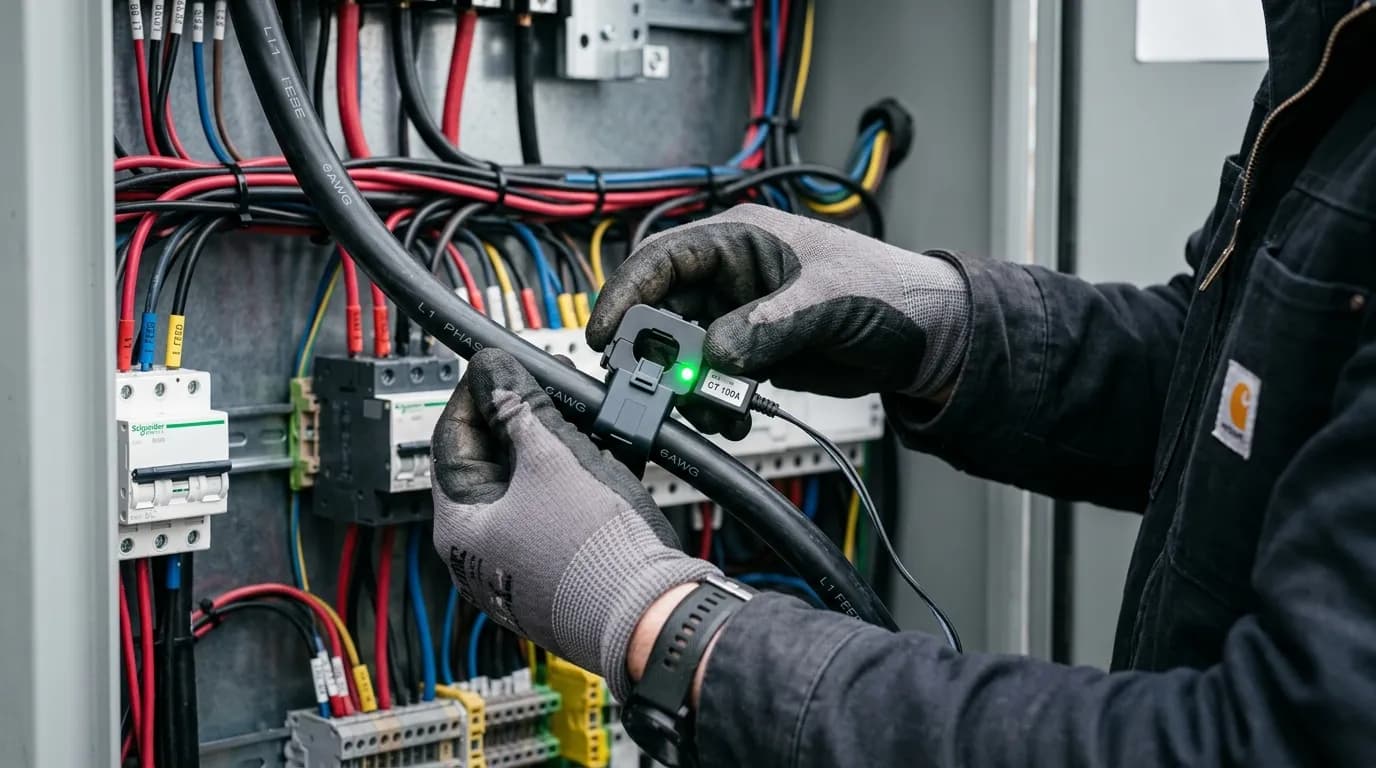
This matters because installation friction kills energy projects. If a rollout requires store closures or production shutdowns, it gets delayed indefinitely. When installation happens during normal business hours with zero impact on operations, the project moves forward without resistance.
How quickly could you start seeing data if installation took a single morning?
Why Is Monitoring the Prerequisite Before Any Investment Decision?
Consider this sequence. A retailer with 80 locations wants to reduce energy costs. Without monitoring, the standard approach would be to hire a consultant, audit 10-15 "representative" sites, and extrapolate findings across the portfolio. This approach misses site-specific issues and often leads to over-investment in some locations and under-investment in others.
With monitoring first, every site gets continuous data. The platform ranks locations by waste intensity. It identifies which sites need schedule fixes (free), which need maintenance (low cost), and which genuinely need equipment upgrades (capital investment). Now your capital budget goes exactly where it creates the most impact.
What Does ROI Actually Look Like for a Monitoring-First Approach?
Let's make this concrete. Consider a mid-sized European retailer operating 50 stores with an average annual energy spend of $120,000 per location. That's $6 million per year across the portfolio.
A monitoring-first approach at a subscription cost of roughly $750-$1,500 per site per month yields $450,000-$900,000 in annual subscription costs. At a conservative 10% savings rate, energy cost reductions total $600,000 per year. That's a positive ROI within the first year, with zero capital expenditure.
The financially rational sequence is clear. Monitor first. Fix operations. Then invest capital only where the data proves it's needed.
Typical payback for energy management systems has collapsed from 5.4 years in the 1980s to under one year today, as IoT and cloud platforms eliminate the need for expensive on-premise infrastructure.
How Do European Regulations Make Monitoring Even More Urgent?
Over 40 cities worldwide already enforce building performance standards for commercial properties. In France, the Decret Tertiaire mandates 40% energy reduction by 2030 for buildings over 1,000 m². Non-compliance carries both financial penalties and reputational risk.
Monitoring provides the documentation trail that proves compliance. It also provides the data you need to prioritize which buildings need renovation and which can meet targets through operational improvements alone. Without that data, you're guessing, and regulators don't accept guesses.
Frequently Asked Questions
Can you really save 10-30% without any equipment changes?
How long does it take to see results from energy monitoring?
Most sites identify their first actionable savings opportunities within two weeks. The steepest savings curve occurs in the first 90 days. Schedule corrections can be implemented immediately, setpoint adjustments within days, and fault repairs within weeks. Across our portfolio, the median time to first measurable savings is 21 days from sensor installation.
What happens after the quick wins are captured?
Does monitoring work for multi-site portfolios?
How does monitoring-first compare to ESCOs or energy performance contracts?
Energy Service Companies (ESCOs) typically bundle monitoring with equipment upgrades and take a percentage of savings over 5-10 year contracts. A monitoring-first approach lets you capture the operational savings yourself before deciding whether an ESCO contract makes sense for the capital-intensive improvements. You keep 100% of the operational savings and enter any future ESCO negotiation with complete data on your building's actual performance.
Energy savings don't start with a purchase order. They start with understanding where your energy actually goes. The monitoring-first approach puts data before decisions, operational fixes before capital projects, and proven results before budget requests.
The buildings that save the most aren't necessarily the ones with the newest equipment. They're the ones where someone is actually watching.