BACS Compliance 2026: What Commercial Building Owners Must Do Now
Remi BouteillerApr 14, 2026
Picture this. You manage a portfolio of commercial buildings across Europe. Your BMS was installed eight years ago, the maintenance contract is current, and your energy reports look reasonable. Then a letter arrives from your national energy authority. Your building doesn't meet BACS requirements under the revised Energy Performance of Buildings Directive. You have six months to comply or face penalties.
This scenario is already playing out across the EU. Since January 1, 2025, all non-residential buildings with HVAC systems above 290 kW must be equipped with a compliant Building Automation and Control System (EU Commission, 2024). By May 29, 2026, every member state must transpose the EPBD recast (EU/2024/1275) into national law. And by 2030, that threshold drops to 70 kW, pulling in schools, retail stores, and small offices.
If you're unsure whether your building qualifies, you're not alone. Let's break it down.
Key Takeaways
The EPBD recast requires BACS Class C minimum for all non-residential buildings with HVAC above 290 kW (effective since January 2025)
By 2030, the threshold drops to 70 kW, affecting most commercial buildings across Europe
All EU member states must transpose the directive into national law by May 29, 2026
BACS Class C demands continuous monitoring, logging, analysis, and reporting of energy use
Non-compliance risks fines, annual audits, and potential suspension of building operating licenses
Lightweight IoT monitoring platforms can meet Class C requirements without full BMS replacement
BACS retrofits deliver 14-20% energy savings with a return on investment within 1-3 years (EU.BAC)
What Does BACS Actually Mean Under the EPBD?
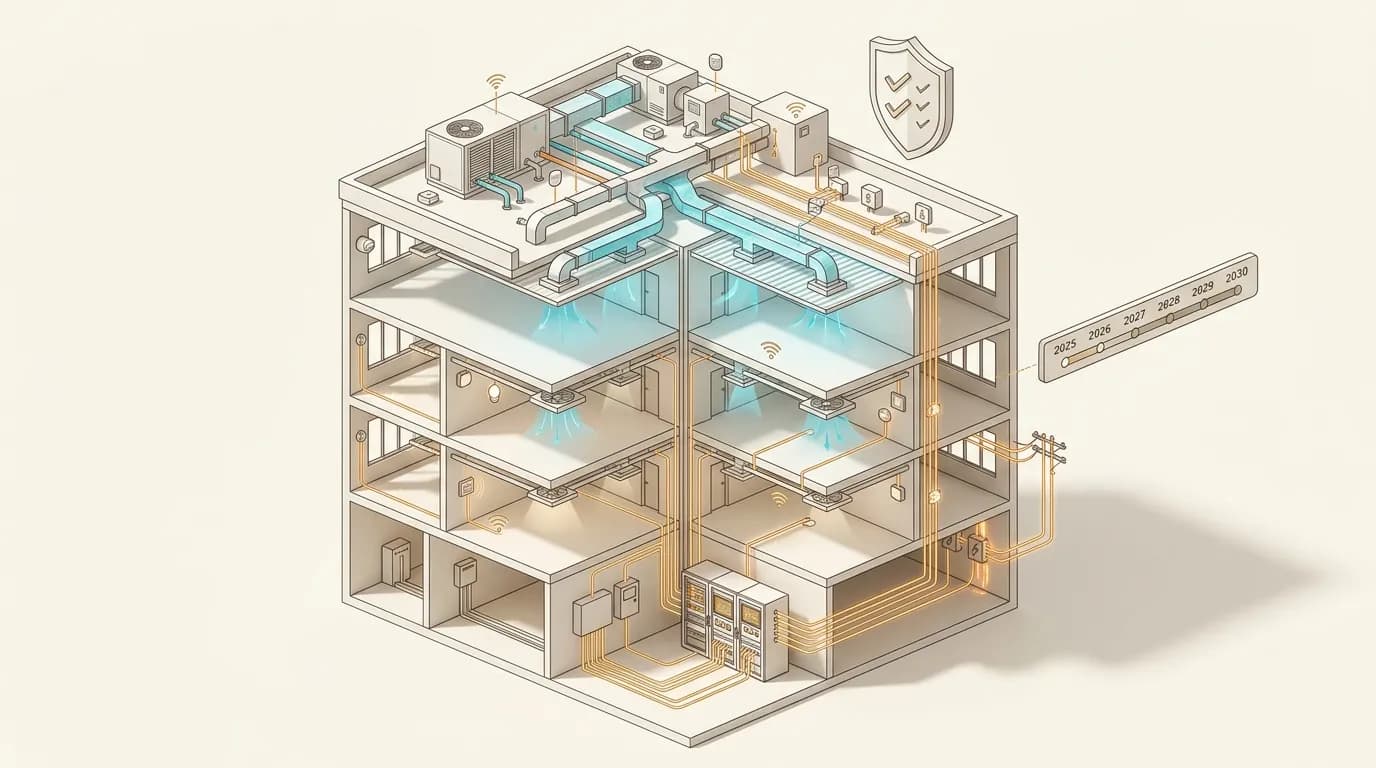
BACS stands for Building Automation and Control Systems. Under EPBD Article 13, a compliant system must be capable of four core functions (EU.BAC, 2024):
Continuously monitoring and logging energy use across all technical building systems
Detecting efficiency losses and faults in heating, cooling, ventilation, and lighting
Informing building managers of improvement opportunities through analysis and reporting
Enabling adjustments to optimise energy performance based on that data
Starting May 29, 2026, BACS must also monitor indoor environmental quality parameters, including air quality and thermal comfort (EPBD Recast, Article 13).
The directive also requires interoperability. Your system must communicate across different equipment brands and protocols. A proprietary system locked to one vendor may not qualify.
What Are the BACS Classes, and Which One Do You Need?
The EN 15232 standard defines four classes of building automation. The EPBD recast mandates a minimum of Class C for all buildings within scope. Here's how the classes compare:
BACS Classes under EN 15232. Class C is now the legal minimum for buildings in scope.
A critical detail: your building's class is determined by its weakest function. If your heating automation meets Class B but your lighting control is Class D, the building is classified as Class D overall (EN 15232). One gap brings down everything.
Our finding: Across the commercial building portfolios we monitor, roughly 60% of sites with an existing BMS still fall short of Class C requirements due to missing data logging, incomplete fault detection, or siloed subsystems that don't communicate.
Why Your Existing BMS May Not Be BACS-Compliant
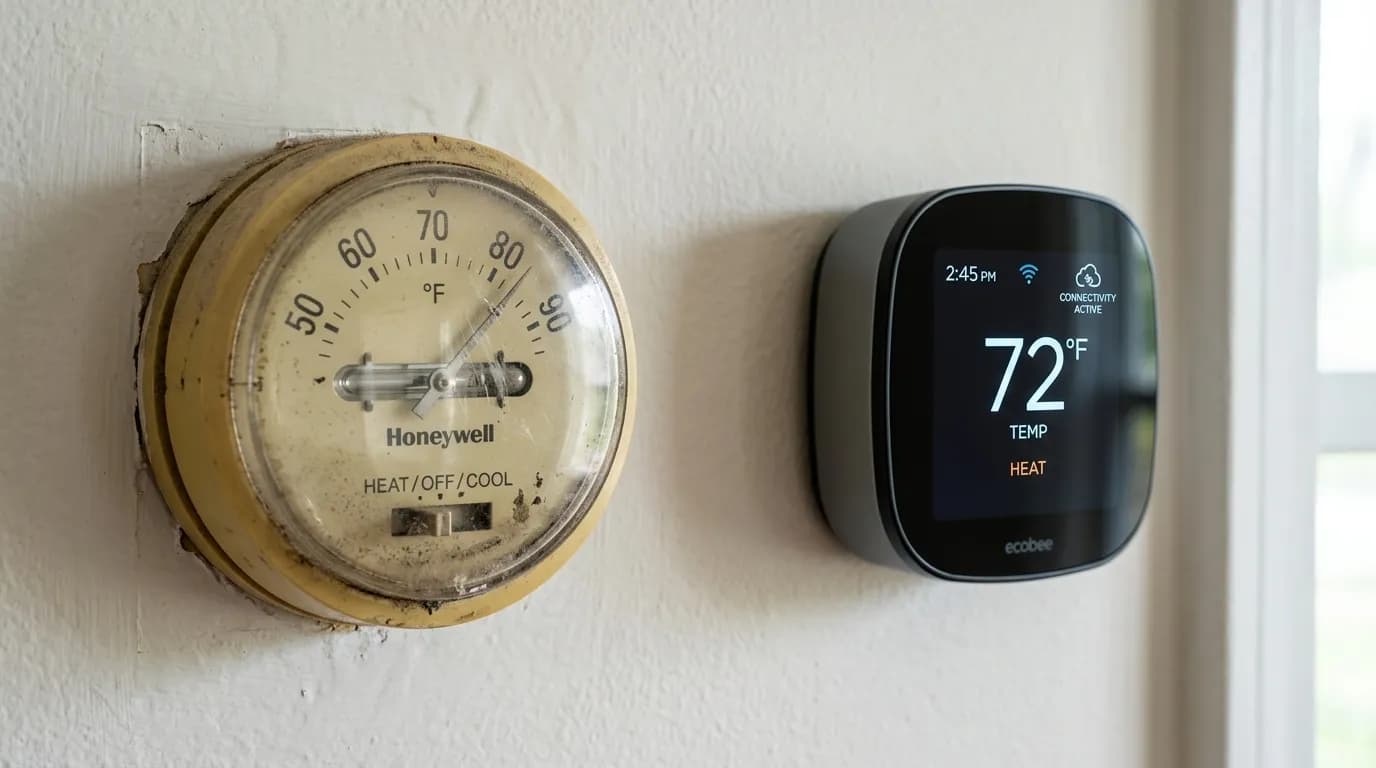
Having a Building Management System installed does not automatically mean you're compliant. Many legacy BMS installations fail to meet BACS Class C because they lack one or more critical capabilities.
Here's where existing systems most often fall short:
No continuous data logging. Many older systems control setpoints but don't store historical data. Without 15-minute interval logging across subsystems, you can't demonstrate compliance.
Limited fault detection. Class C requires flagging efficiency losses and faults. A BMS that runs schedules without analyzing performance gaps doesn't qualify.
Siloed subsystems. If your HVAC, lighting, and metering don't communicate, you're not interoperable. The EPBD requires cross-system data exchange.
No reporting capability. Periodic energy performance reports for building managers aren't optional. If your BMS can't produce them, you have a gap.
If any of these apply, you'll need to upgrade or supplement your system before the national transposition deadline. The good news: you don't necessarily need a full BMS replacement.
What's the Compliance Timeline?
The EPBD recast sets a phased rollout that's already underway (EU Commission, 2024):
Key milestones in the BACS compliance timeline under the EPBD recast.
The January 2025 deadline for 290 kW+ buildings has already passed. If you haven't acted yet, you're technically non-compliant.
The May 2026 transposition deadline is just weeks away. After that, each country's penalties and enforcement mechanisms take effect.
The 2030 threshold drop to 70 kW is the game-changer. It pulls in standalone supermarkets, care facilities, schools, and small offices. For multi-site portfolios, this will likely affect the majority of properties.
How prepared is your building stock for that expansion?
What Happens If You Don't Comply?
Non-compliance with BACS requirements carries escalating consequences (Spectral Energy, 2026):
Warning notice from the national energy authority
Annual compliance audits until the building meets requirements
Financial penalties that vary by member state (set during national transposition)
Property value depreciation as non-compliant buildings score lower on Energy Performance Certificates
Potential suspension of the building's operating license in severe cases
Beyond regulatory risk, there's the financial opportunity cost. According to EU.BAC, BACS retrofits deliver energy savings corresponding to 14% of total building consumption, with the value of energy savings exceeding investment costs by a factor of 9. Non-compliant buildings aren't just risking fines. They're leaving money on the table every single day.
Our finding: For a typical 5,000 m² commercial building spending around 120,000 euros annually on energy, the gap between a BACS-equipped building and one without continuous monitoring typically represents 15,000 to 25,000 euros in preventable waste per year. That means compliance often pays for itself within the first 12-18 months.
How Is Each Country Handling Transposition?
While the EPBD sets the framework, implementation varies by country. Here's where four major markets stand as of April 2026:
France: Leading the Pack
France has been the most proactive. The country anticipated the EPBD recast through its own BACS decree (Decret BACS), which already requires automation for buildings above 70 kW since 2025. That's five years ahead of the EU-wide 70 kW deadline.
The BACS decree works alongside the Decret Tertiaire, which mandates energy consumption reductions of 40% by 2030, 50% by 2040, and 60% by 2050 for all tertiary buildings above 1,000 m² (Legifrance). The two regulations are designed as complementary levers. BACS provides the tools; the Decret Tertiaire sets the targets.
If you operate buildings in France, you're already under the strictest regime in Europe. Our energy tracking guide covers how continuous monitoring supports Decret Tertiaire reporting.
Germany: Structured but Gradual
Germany enforces BACS for buildings above 290 kW since January 2025, but hasn't adopted the intermediate 70 kW threshold that France uses (Sobre Energie, 2025). The German approach seeks systematic adoption without economic exemptions, showing a clear but progressive commitment.
Transposition of the full EPBD recast is expected before the May 2026 deadline.
Netherlands: Fresh Start
The Netherlands implemented its building automation requirements (GACS) on January 1, 2026 (AKD, 2025). Dutch building owners have recently come into scope and are now working to assess their compliance status.
Spain: Still in Progress
Spain has launched public consultations on transposition, but no final legislation has been published yet (Longevity Partners, 2025). Building owners in Spain should prepare for compliance requirements to land later in 2026, but the specifics of penalties and timelines remain open.
The takeaway? Don't wait for your country's final transposition. The EU-level requirements are clear. Start now.
What Does BACS Class C Actually Require in Practice?
Let's translate the legal language into concrete technical capabilities. To reach Class C, your building needs (EU.BAC Compliance Checklist, 2024):
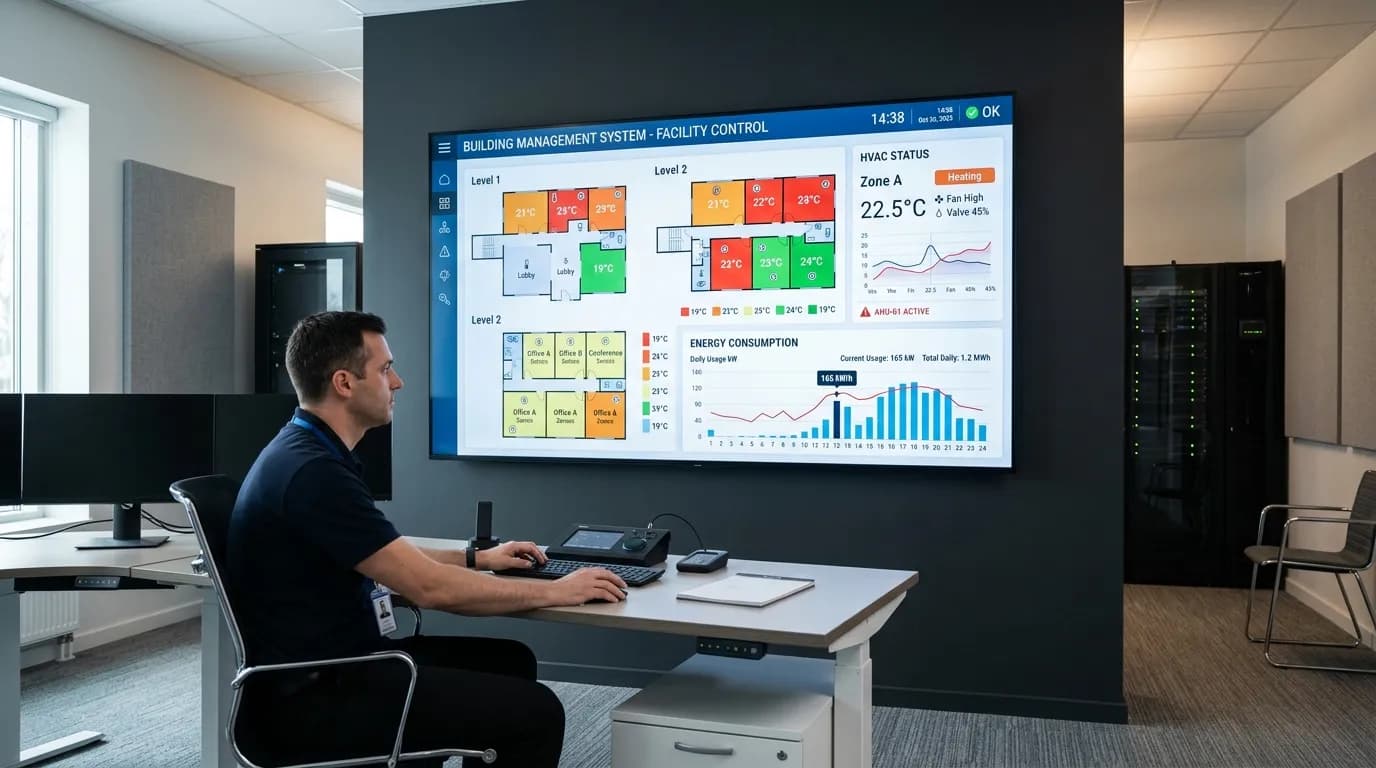
Energy monitoring at 15-minute intervals across heating, cooling, ventilation, lighting, and domestic hot water. This data must be logged and stored for analysis, not just displayed in real time.
Fault detection and diagnostics. The system must identify when equipment is performing below expected efficiency. Think of a chiller running at 40% COP when it should deliver 60%. The system should flag that deviation.
Benchmarking capability. Your system must compare current performance against historical baselines. Are you consuming more energy this January than last January for similar weather? The system should answer that question.
Reporting to building managers. Automated or semi-automated reports that highlight improvement opportunities, efficiency losses, and consumption trends.
Interoperability. The system must work across different equipment brands and protocols. Open standards like BACnet, Modbus, or MQTT satisfy this requirement.
Notice what's not required for Class C: you don't need fully automated control adjustments, room-level occupancy sensing, or demand-response integration. Those are Class A and B features. Class C is fundamentally about monitoring, analysis, and information.
That distinction matters enormously for cost and complexity.
Can Lightweight IoT Monitoring Meet BACS Class C?
Yes. And this is where many building owners overlook a simpler path to compliance.
Traditional BMS upgrades for a commercial building can cost $2.50 to $7.50 per square foot (Intel / Ready.one). For a 5,000 m² building, that translates to roughly 125,000 to 375,000 euros. For a multi-site portfolio, the capital requirement becomes prohibitive.
But Class C doesn't demand full automation. It demands monitoring, logging, analysis, and reporting. Those are exactly the capabilities that modern IoT platforms deliver at a fraction of the cost.
Here's what a lightweight compliance approach looks like:
IoT sensors on key circuits and equipment. Clamp-on CT sensors, pulse counters on meters, and temperature probes provide the consumption data required for continuous logging. No rewiring needed. No disruption to building operations.
Cloud-based analytics platform. Data flows to a central platform that handles storage, fault detection, benchmarking, and report generation. This covers the analysis and reporting requirements.
Open protocol communication. IoT platforms using MQTT, Modbus, or API integrations satisfy the interoperability requirement without proprietary lock-in.
Alerts and dashboards for building managers. Automated notifications when consumption deviates from expected patterns fulfil the "informing building managers" mandate. Our comparison of energy alerts vs dashboards explains why both are essential.
Our finding: Across our deployments, IoT-based monitoring platforms achieve BACS Class C compliance at roughly one-tenth the cost of a full BMS retrofit. For a typical supermarket or office building, installation takes 2-4 hours per site with zero downtime. The annual subscription model also means no upfront capital expenditure, which matters for businesses managing energy savings without capex.
How Much Can BACS Compliance Actually Save?
Let's talk numbers. The business case for BACS goes well beyond avoiding penalties.
According to EU.BAC, building automation retrofits could deliver annual savings corresponding to 14% of total EU service-sector building energy consumption, equating to 64 Mt CO2 and 36 billion euros in energy cost savings annually. For HVAC systems specifically, upgrading BACS performance delivers 15-38% energy savings with ROI within 1-3 years (Wattsense, 2025).
Energy savings potential by BACS class for non-residential buildings compared to Class D.
The savings come from three main areas:
Schedule optimisation. Eliminating after-hours energy waste is often the single biggest win. Buildings on fixed HVAC schedules without occupancy monitoring waste 20-30% of their energy budget.
Fault detection. A compressor cycling too frequently, a chiller with degraded COP, a heating valve stuck open. Without monitoring, these faults persist for months. With BACS, they're flagged within hours.
Load management. Understanding your consumption profile enables load shifting that reduces peak demand charges. On time-of-use tariffs, this can cut the commercial electricity bill by 10-15%.
What's your biggest energy blind spot right now?
A Practical Compliance Roadmap
If you're a building owner or facility manager looking at BACS compliance, here's a step-by-step approach:
Step 1: Assess Your Current State
Audit your existing systems. Map every HVAC, lighting, and metering system. Document what's monitored, logged, and what's not. Compare against the EU.BAC compliance checklist.
Step 2: Identify Gaps Against Class C
Focus on four pillars: monitoring, fault detection, benchmarking, and reporting. Most buildings fail on at least two. Close the easiest gaps first.
Step 3: Choose Your Compliance Path
Full BMS upgrade. For new builds or buildings with no automation. Higher cost, but delivers Class A or B.
IoT overlay on existing systems. For buildings with some controls. Lower cost, faster deployment, sufficient for Class C. Best for multi-site portfolios.
Step 4: Deploy and Validate
Install monitoring, configure analytics, and run for 30 days to establish baselines. Generate your first compliance report.
Step 5: Optimise Continuously
Compliance is the floor, not the ceiling. Use the data to drive ongoing reductions. Every percentage point compounds across your portfolio.
Ready to start your BACS compliance journey? Get in touch with our team to assess your building portfolio.
How Does BACS Connect to Other EU Regulations?
BACS doesn't exist in isolation. It's part of a broader regulatory push toward decarbonising Europe's building stock.
The Decret Tertiaire (France) mandates absolute energy reductions for tertiary buildings. BACS provides the monitoring infrastructure to track progress toward those targets. Without it, you're reporting blind.
The Energy Efficiency Directive (EED) requires member states to achieve annual energy savings of 1.5% from 2026 and 1.9% from 2028. Building automation is one of the primary tools governments will use to hit those numbers.
The Smart Readiness Indicator (SRI) is an optional EU scheme rating a building's technological readiness. The Commission is piloting it for large non-residential buildings (EU Commission, 2025). BACS compliance gives you a head start.
Energy Performance Certificates (EPCs) are being strengthened under the EPBD recast. Buildings without BACS will score lower, impacting property values and rental attractiveness.
These regulations compound. Buildings that invest in monitoring now will meet every subsequent requirement more easily. Those that delay face mounting costs.
Is your building prepared for the next regulatory wave?
Frequently Asked Questions
What is BACS compliance under the EPBD recast?
BACS compliance means equipping your non-residential building with a Building Automation and Control System meeting at least Class C under EN 15232. This includes continuous energy monitoring, fault detection, benchmarking, and reporting. The EPBD recast (EU/2024/1275) mandates BACS for buildings with HVAC above 290 kW since January 2025, dropping to 70 kW by 2030.
Does my existing BMS count as BACS-compliant?
Not necessarily. Many legacy BMS installations control setpoints and schedules but lack continuous data logging, fault detection, or cross-system interoperability. Your system must monitor, log, detect faults, report to managers, and communicate across brands. Assess against the EU.BAC compliance checklist to find out.
What are the penalties for BACS non-compliance?
Penalties vary by member state (transposition deadline: May 29, 2026). Generally, non-compliance triggers a warning, then annual audits. Continued non-compliance can result in financial penalties and potential suspension of the building's operating license. Non-compliant buildings also face property value depreciation and lower EPC scores.
Can IoT monitoring achieve BACS Class C without replacing my BMS?
Yes. Class C requires monitoring, logging, analysis, and reporting, not full automation. IoT sensor platforms with cloud analytics deliver all four at a fraction of BMS replacement cost. Sensors install in hours without disruption. Contact us to discuss your building type.
How does BACS relate to France's Decret Tertiaire?
They're complementary. The Decret Tertiaire sets energy reduction targets (40% by 2030, 50% by 2040, 60% by 2050) for tertiary buildings above 1,000 m². The BACS decree provides the monitoring infrastructure to track those reductions. You need both: BACS for the tools, Decret Tertiaire for the targets.
BACS compliance isn't just a regulatory checkbox. It's the foundation for every energy savings strategy your building will need over the next decade. Whether you're managing a single office building or a portfolio of retail sites across Europe, the time to act is now. Talk to our team about a compliance assessment for your buildings.
We use cookies to improve your experience and analyze site usage. Privacy policy