Bloc + Spot Power Contracts: 2026 Supermarket Strategy
ARENH died on 31 December 2025. With it, the safety net at EUR 42/MWh that had cushioned every French B2B power contract since 2011. For grocery retail, where a hundred-store chain runs through 200 to 400 GWh a year, this is not a paperwork change. It rewrites the bill.
The market sets the pace. The French spot price hit EUR 81/MWh on 27 April 2026, with a 30-day average around EUR 91/MWh. Cal-2026 baseload trades at EUR 58/MWh, Cal-2027 at EUR 49/MWh. Three prices, three curves, and an energy buyer who must pick where to place their money.
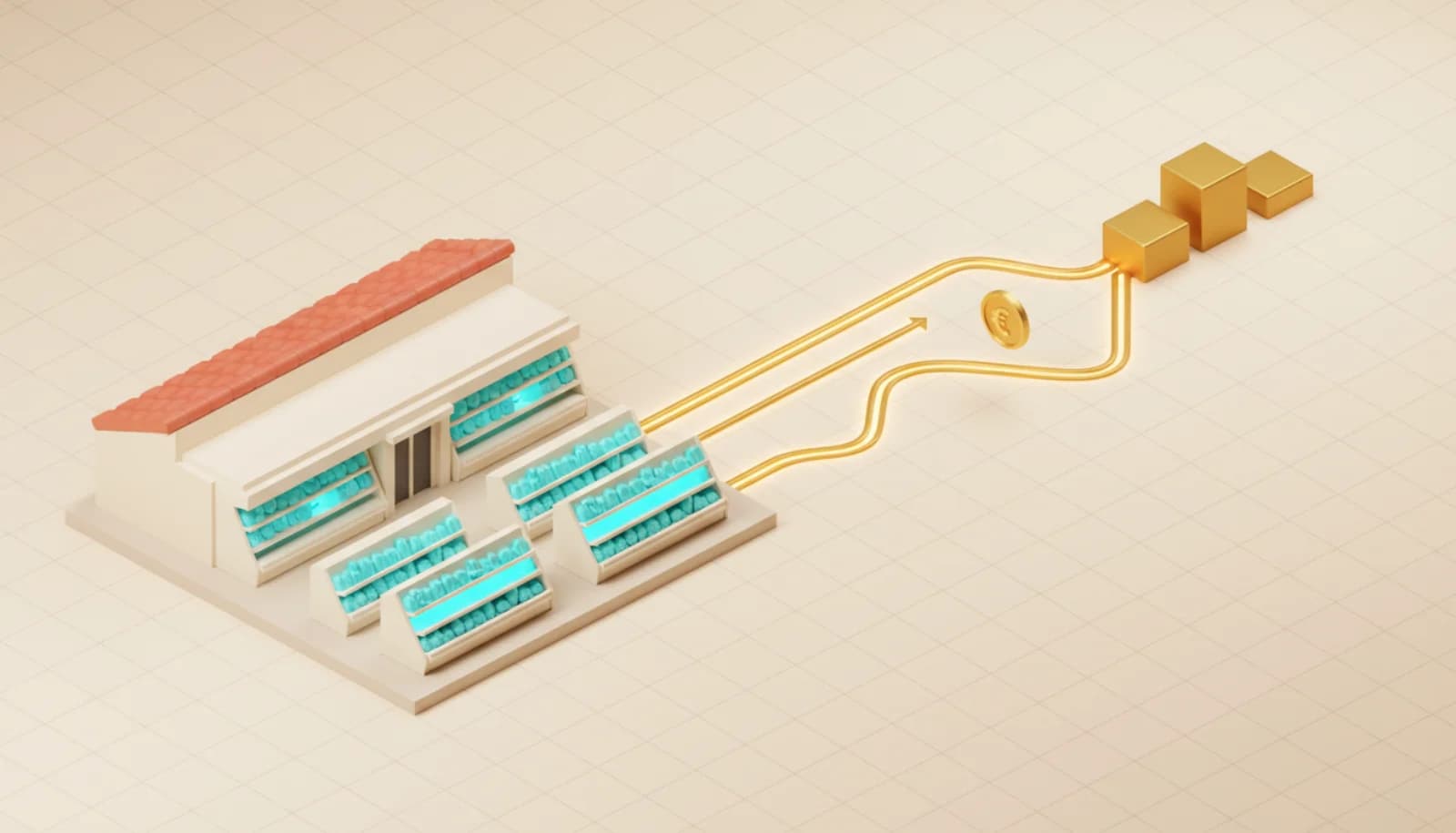
The increasingly dominant answer inside French retail energy desks has a name: the bloc + spot contract. A hybrid structure that locks in 70 to 80% of the volume on forward markets, and lets the remaining 20 to 30% float on EPEX at the hourly day-ahead price. The bet? Capture the dips, smooth the spikes, and beat a 100% fixed contract by EUR 5 to 10/MWh.
Key Takeaways
- The French average spot price was EUR 61/MWh in 2025 (vs EUR 58/MWh in 2024), with 513 hours of negative prices and 1,807 hours above EUR 100/MWh (RTE / Selectra, 2026)
- ARENH ended on 31 December 2025 and the new Versement Nucléaire Universel (VNU) only triggers above EUR 78/MWh: CRE estimates EDF's 2026 nuclear revenue at EUR 65.86/MWh, so no redistribution is expected this year (EDF Entreprises, 2025)
- Bloc + spot blends 70 to 80% of secured volume via forward blocs (Calendar, Quarter, Month) with 20 to 30% indexed on EPEX day-ahead, dropping the supplier risk premium versus a 100% fixed contract (Capitole Energie, 2026)
- The historical 10 GWh/year access threshold now drops to 1 GWh through purchasing pools, opening the strategy to independent supermarkets and franchisees (Capitole Energie, 2026)

What Is a Bloc + Spot Contract?
For a hypermarket consuming 3 GWh per year, that translates into 2.1 to 2.4 GWh bought at a price set in stone, and 600 to 900 MWh exposed to the hourly market. The result is more stable than 100% spot, more competitive than 100% fixed, and far more steerable.
Our take: Bloc + spot is not a product, it is a discipline. A passive buyer who signs 80% bloc and forgets the contract captures very little value. The edge appears when the buyer adjusts blocs quarter by quarter, buys more forward when the curve dips, and uses on-site flexibility to shed during expensive spot hours. Bloc + spot rewards active buyers, not subscribers.
Why Does 2026 Change the Game for Buyers?
In practice, the 2026 buyer faces a freer, more volatile market, with price formation now fully dependent on forwards and spot. That is exactly the terrain bloc + spot was designed for.
How Much Bloc, How Much Spot?
The empirical rule across grocery retail sits between 70/30 and 80/20, with a dominant bloc share. Below 60% bloc, the bill becomes too sensitive to winter spot spikes. Above 90%, you lose the upside from negative-price hours and sunny weekends.
The consumption profile drives the trade-off. A supermarket opens early, ramps to peak around midday, dips in the afternoon, and ramps again until closing. That curve maps reasonably well onto baseload at night (refrigeration runs continuously) and onto peakload during the day (registers, lighting, HVAC). An optimised hedge therefore mixes 50 to 60% Cal-2026 baseload for the 24/7 floor, 10 to 20% peakload for the trading-hour spike, and 5 to 10% quarterly blocs for seasonal swings (summer cooling, winter heating). Spot picks up the residue.
Our take: The spot share of a bloc + spot contract should always be larger than the demand response capacity available across the portfolio. If you have 500 kW of pilotable load on a store and your spot exposure is 200 kW, you leave 300 kW of arbitrage capacity idle. Counter-intuitive flip of the usual logic: flexibility unlocks the spot share, not the other way around.
How Much Can It Actually Save?
The risk is real. If the winter is cold and spot averages EUR 80/MWh against EUR 50/MWh on bloc, the spot share costs EUR 30/MWh more than the bloc, or EUR 7.5/MWh on the 75/25 mix. The expected gain disappears. That is exactly why no serious buyer goes above 30% spot without operational flexibility to push consumption from expensive hours to cheap ones. Bloc + spot and physical flexibility are two faces of the same strategy.
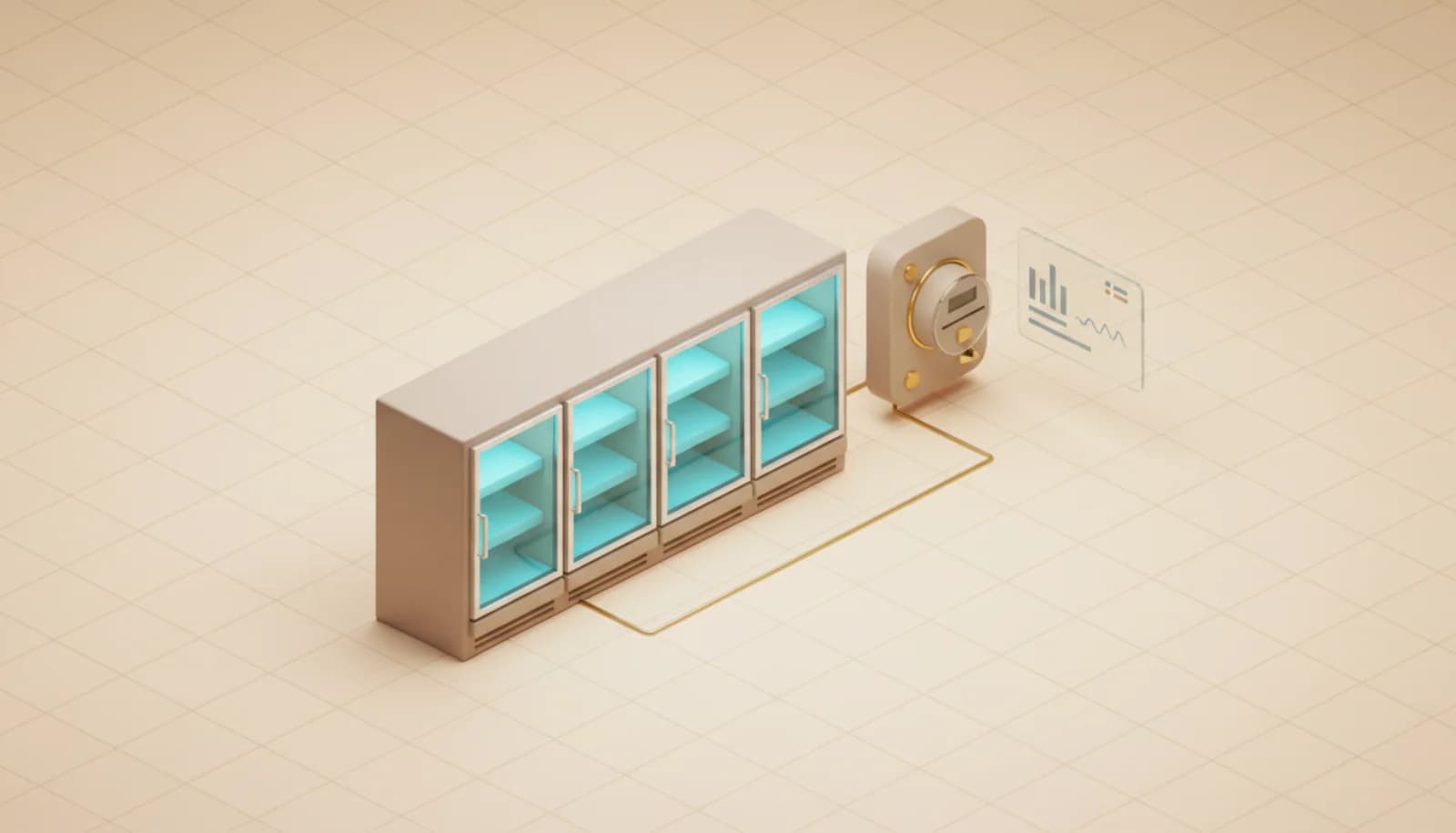
What we see in the field: Buyers who get the best results on bloc + spot consistently run two tools in parallel: hourly consumption tracking, and an active demand response or load-shifting program. Without those two pieces, the spot share becomes a passive trader who absorbs spikes instead of avoiding them.
What Infrastructure Makes Bloc + Spot Work?
Three prerequisites turn a bloc + spot contract from a financial product into an operating lever: hourly consumption tracking, a physical flexibility strategy, and a clear procurement governance. Without those three, bloc + spot is a defensive saving. With them, it is an offensive margin.
Frequently Asked Questions
What is the difference between a spot-indexed contract and a bloc + spot contract?
A 100% indexed contract follows the EPEX day-ahead price every hour, with full exposure and maximum volatility. A bloc + spot locks 70 to 80% of the volume on secured forward prices and only exposes the residual to spot. Bloc + spot delivers fixed-contract stability on most volume, with indexed-contract upside on the margin.
What consumption do I need to sign a bloc + spot?
Historically reserved for sites consuming above 10 GWh/year, bloc + spot is now accessible from 1 GWh/year through purchasing pools or specialised aggregators. A 50-store chain can therefore structure a contract even if every individual site is below the threshold.
What happens if I consume more than the bloc volume?
The gap between actual consumption and bloc volume is settled at the hourly spot price. If you secured 80% of your forecast and you consume 105% of the volume, the 25% gap clears at spot. A good forecast (built on hourly historical data) keeps that gap below 10%.
Do I need an in-house trader to run a bloc + spot?
No. Most suppliers (Engie B2B, EDF Pro Premium, Total Direct Energie, GreenYellow) and brokers (Opéra Energie, Capitole Energie, Eneffic) offer an arbitrage service that executes blocs against an agreed policy. The customer's role is limited to validating a quarterly strategy.
Could VNU make 100% fixed more attractive than bloc + spot?
Not in 2026, where CRE estimates EDF revenue at EUR 65.86/MWh, below the EUR 78/MWh threshold that would trigger redistribution. If market prices were to climb meaningfully above EUR 78/MWh for several consecutive quarters, a partial VNU would mechanically cushion both fixed contracts AND forward blocs. The relative logic between fixed and bloc + spot stays intact.
Your Energy Has Become a Financial Asset. Manage It Like One
ARENH is gone, the spot market is volatile again, and forward Cal-2026 and Cal-2027 are showing EUR 5 to EUR 9 drops that active buyers can capture. For grocery retail, where 200 to 400 GWh per year flows through the meters, every saved euro per MWh adds up to millions.
Bloc + spot is not a sign-and-forget product. It is a procurement discipline that delivers EUR 5 to 10/MWh when properly run, and zero when neglected. Chains that pair a quarterly-adjusted bloc + spot with a piloted demand response program capture both sides of the market: the forward drop via blocs, the spot value via flexibility.